
Finance and Fintech

QA That Protects Every Transaction

In Fintech, You Don’t Ship Bugs. You Ship Failed Payments, Frozen Accounts, and Audit Findings.

There’s no margin for error in financial software. Customers trust you with their money, their documents, and their identity – and as a regulated industry, you answer to overlapping state, federal, and cross-border rules at the same time. A single missed defect can corrupt a transaction, expose sensitive data, or trigger a regulatory finding that costs far more than the release ever earned. Incisive QA puts senior engineers and AI tooling on the exact risks fintech releases carry: transaction integrity, reconciliation and data accuracy, peak-load stability, fraud, KYC and AML flows, multi-currency and payment-gateway resilience, compliance exposure, fragile third-party integrations, and security that can’t wait for next quarter.

1

WHAT WE TEST

Every Layer Where Money Moves

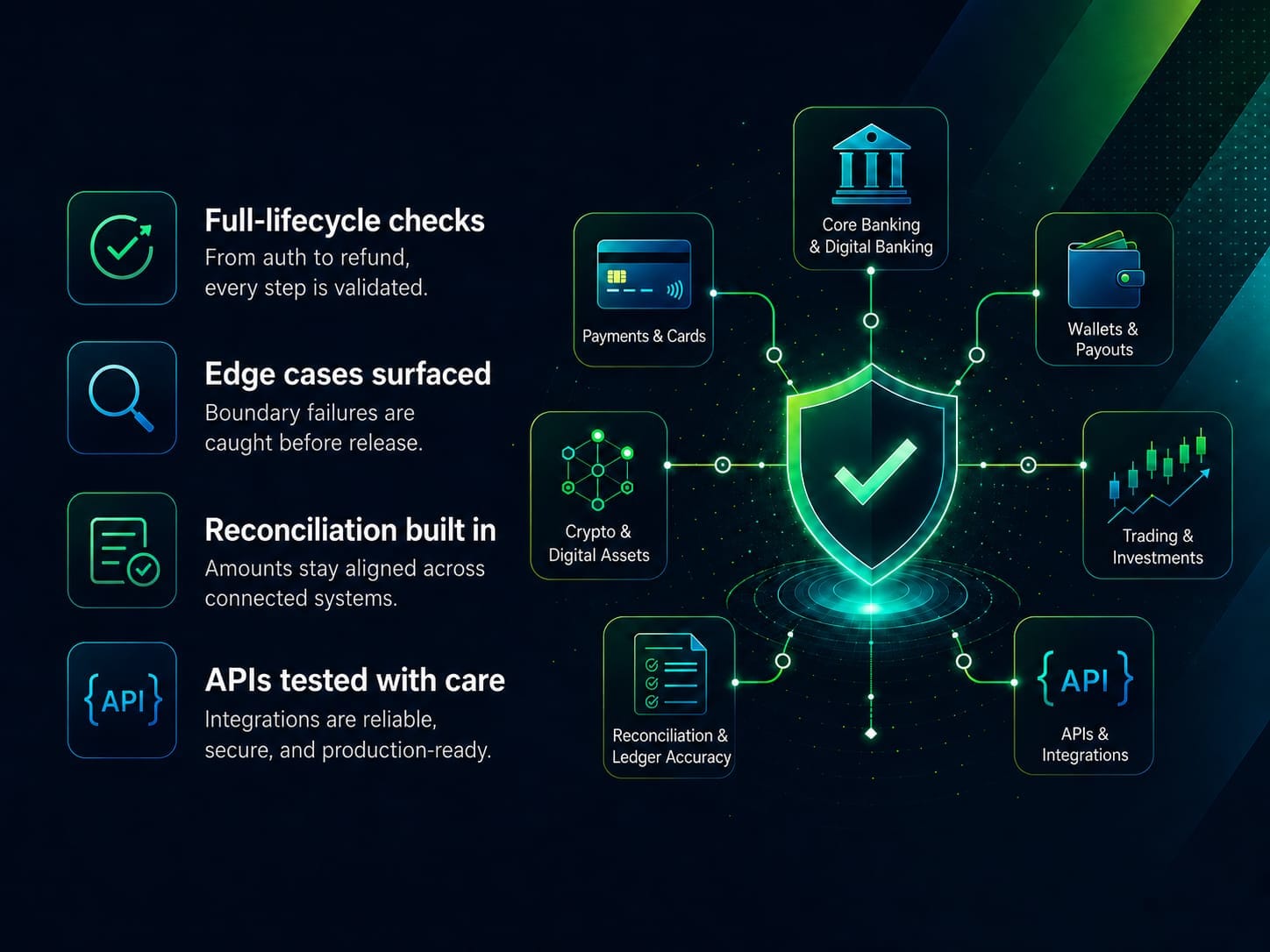
Payments and gateways, core banking, lending and BNPL, neobanks, trading and wealth, crypto and open-banking APIs – wherever a balance changes, we test it. Our engineers validate transaction integrity across the full lifecycle (authorization, capture, settlement, refund, dispute), catch the boundary cases manual design misses, and run reconciliation checks so every cent is accounted for.

2

WHERE AI EARNS ITS PLACE

AI Does the Heavy Lifting. Engineers Make the Call

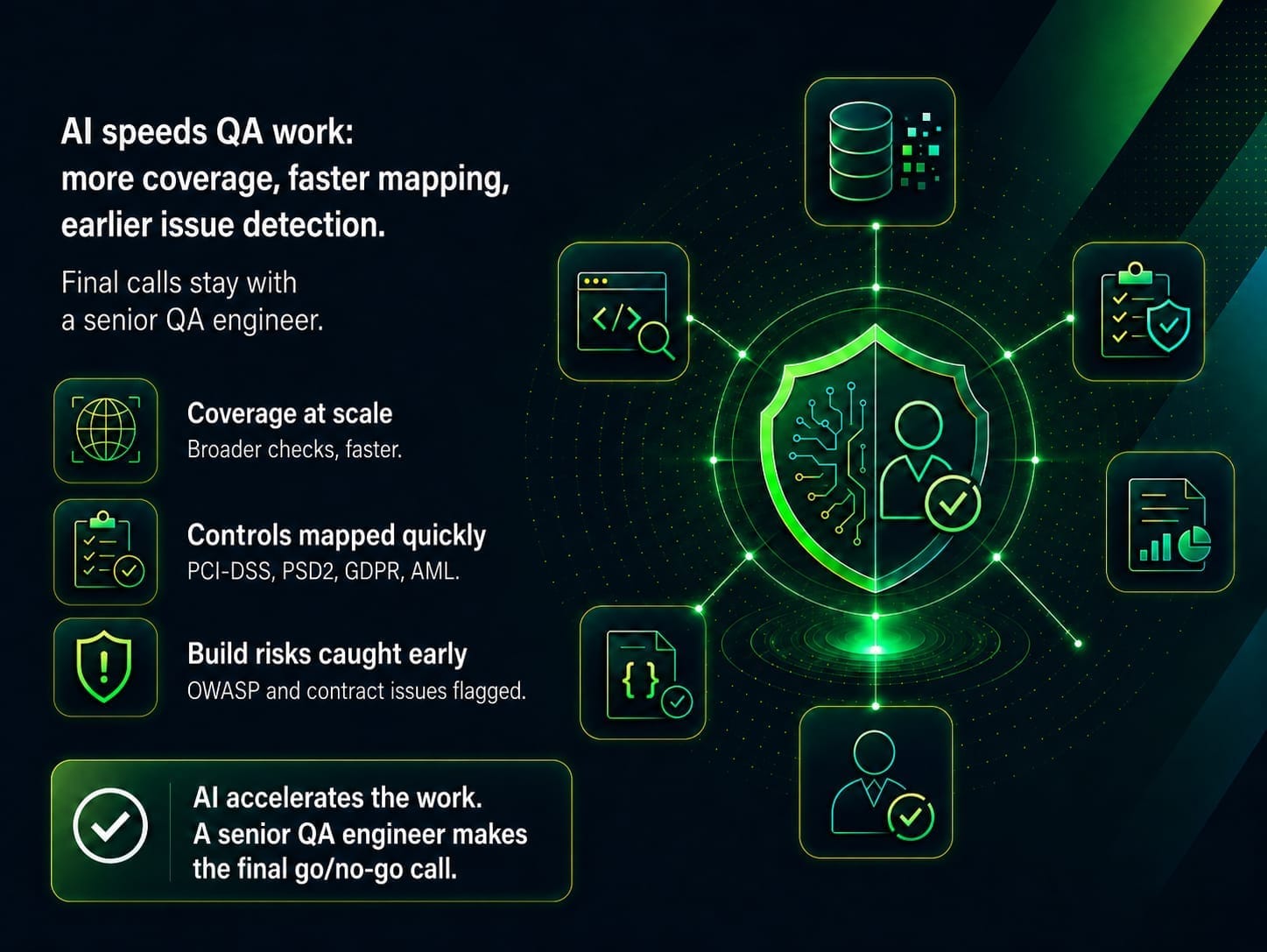
The work that normally drags fintech QA to a crawl – exhaustive transaction-boundary coverage, mapping evidence to PCI-DSS, PSD2, GDPR and AML controls, scanning every build for OWASP and contract-breaking changes – is where we put AI to work, all against synthetic data, never live records. But AI never decides if you ship. A senior QA engineer owns release readiness and stands behind every go/no-go.

3

WHY TEAMS STAY

A Partner Held to Outcomes, Not Hours

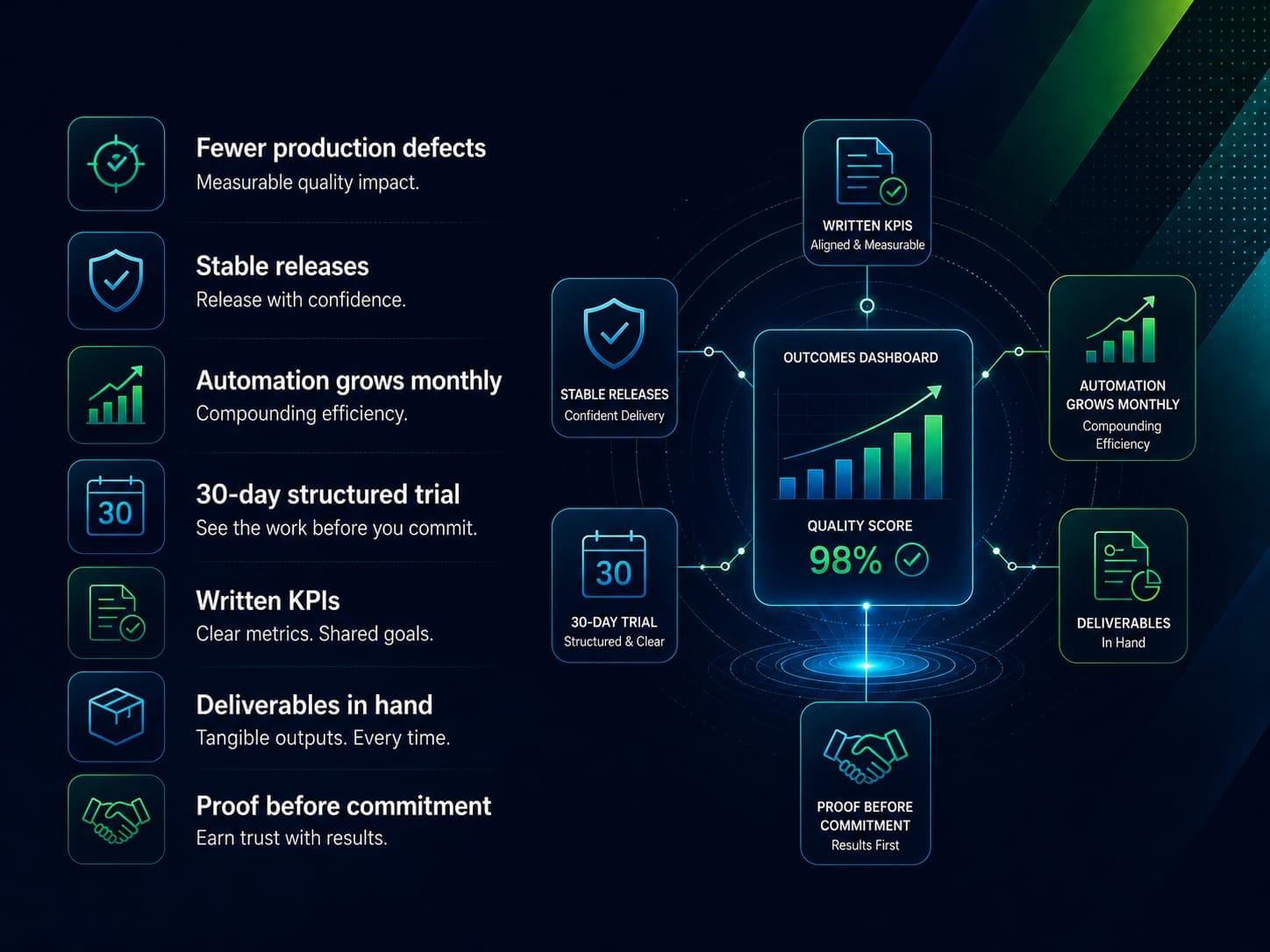
We don’t bill you for test execution – we’re accountable for results: fewer production defects, stable releases, automation that grows every month. Every engagement carries written KPIs and starts with a 30-day Structured Trial you can walk away from, deliverables in hand. You see the work before you commit to anything longer.

FAQ

We never test against live customer data. Engagements run on synthetic test data that mirrors the structure and edge cases of real financial records – without exposing a single real identifier. That removes one of the biggest security risks in the testing process itself.

PCI-DSS, PSD2 and Strong Customer Authentication, GDPR, and AML/KYC workflows. We map test coverage directly to control requirements and use AI to keep that mapping current as your product and the regulations change. Compliance testing doesn’t replace a formal audit – but it sharply reduces the risk of findings during one.

Built in, not bolted on quarterly. AI-monitored OWASP scanning runs against every build, and authentication, authorization, and data-exposure patterns are validated continuously. Deeper penetration testing on high-risk surfaces is scoped as a focused addition.

That’s the most common thing we hear – and it’s usually deserved. We’re held to outcome metrics, not activity reports: defect leakage, release stability, automation growth. And we start with a 30-day Structured Trial with defined deliverables and a clean exit, so you see the work before any longer commitment.

Days 1–10 cover your architecture, stack, business logic, and team rhythm. From day 11 the engineer contributes independently. By day 30 you have a working Playwright framework, the first automated tests live in CI/CD, and a clear picture of the value ahead.

Contractual KPIs: minimum 80% automated coverage of critical functions, at least 30 new automated tests per month, defect reporting within 24 hours, 100% attendance at your Scrum ceremonies, a written report every Friday, and a maximum 4-business-hour response time.

Playwright as primary, Selenium for legacy and enterprise environments, Appium for mobile, and Postman for the API layer that carries most fintech risk. Performance runs through k6 and JMeter. AI-enhanced locators keep automation alive through UI changes without a maintenance sprint.

Either. Many teams keep in-house QA owning strategy and bring us in for capacity, automation buildout, or specialist coverage. Others have us own release readiness end-to-end. The goal is predictable releases, not territory.

Testimonials

  • John

    CTO, FinTech Payments Platform

    “We went from two critical production bugs a month to zero across the next 90 days. Our QA engineer understood our payment flows better than we expected – now we release without that knot in our stomach every time.”

    5.0 rating
  • Peter

    Head of Engineering, Fintech Logistics Platform

    “Our frontend was tested; our API layer basically wasn’t. They built full API coverage across every endpoint and third-party integration, and caught three critical bugs before our first release. Zero integration incidents in production since.”

    5.0 rating
  • Mariah

    VP Engineering, Financial Services SaaS

    “The previous vendor was cheaper per hour. They cost us far more per sprint. With Incisive, the engineer is in our Slack during our hours, responds in under an hour, and actually owns release readiness.”

    5.0 rating
Form Image

Ready to Boost Product Quality?

Requests are reviewed within 48 hours. We’ll follow up with next steps.