

SaaS and Enterprise

SaaS and Enterprise

AI-Augmented QA for SaaS Platforms

In SaaS, You Don’t Ship Bugs. You Ship Data Leaking Between Tenants, Broken Releases, and Enterprise Customers Who Churn.

A permission boundary that lets one tenant see another’s data, a regression that slips through because tests can’t keep up with daily deploys, a feature flag that quietly breaks a flow for half your accounts – in SaaS, these aren’t tickets. They’re security incidents, missed SLAs, and enterprise logos that don’t renew. Incisive QA brings AI-augmented quality assurance built for the velocity and complexity of modern SaaS: multi-tenant isolation, CI/CD-native testing, scalability under real load, and the API layer your enterprise customers depend on.

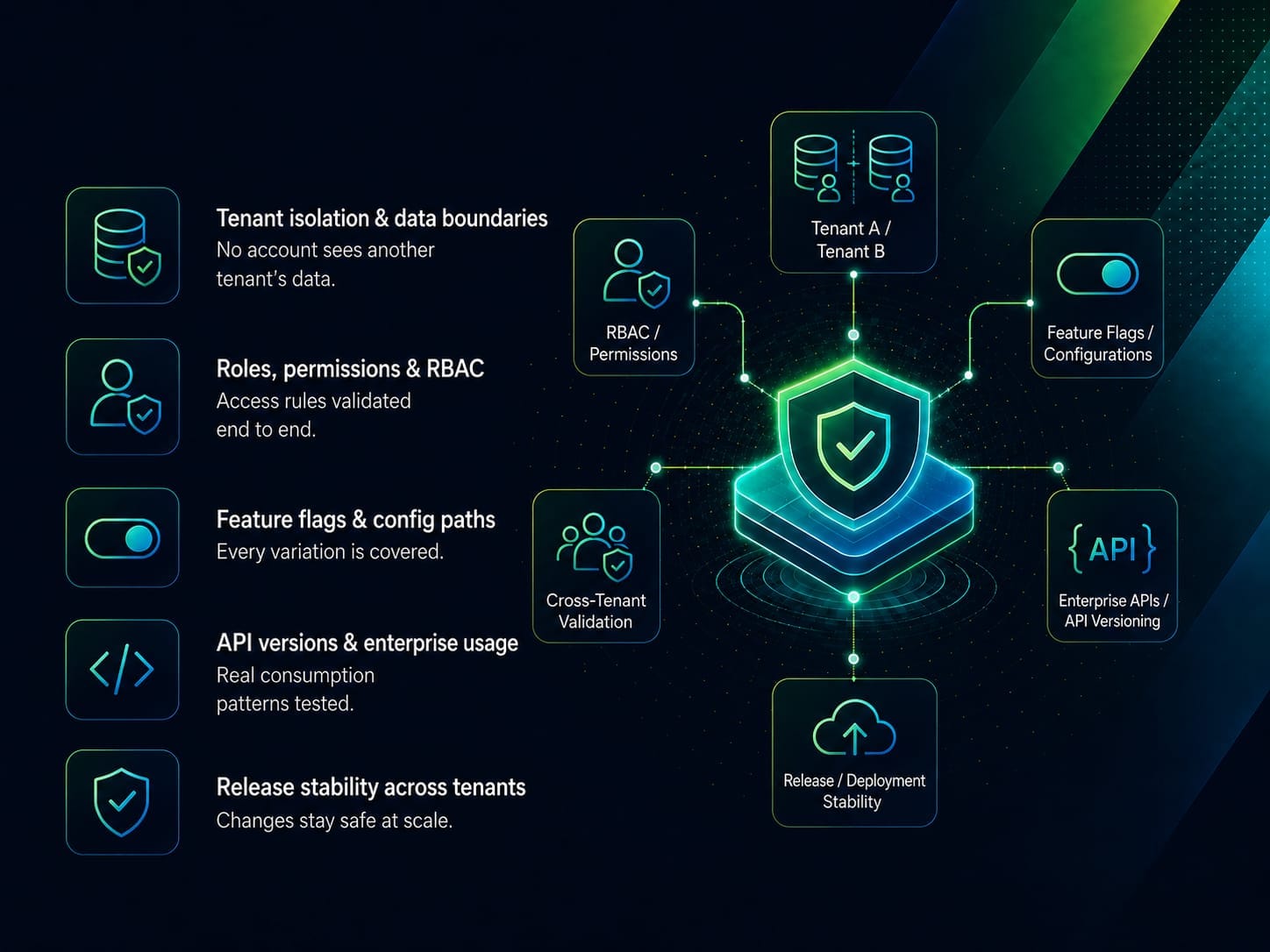
Cross Tenant Validation

WHAT WE TEST

Multi-Tenant Isolation, Releases, and the API Layer Enterprises Live On

Tenant data isolation, role and permission boundaries, feature flags, API versioning, release stability – wherever a SaaS platform can break, we test it. Our engineers generate systematic cross-tenant access tests that would take weeks to write by hand, validate RBAC and multi-tenant config end to end, and cover the API consumption patterns enterprise customers actually push – so no account ever sees data that isn’t theirs.

QA Hub

WHERE AI EARNS ITS PLACE

AI Does the Heavy Lifting. Engineers Make the Call

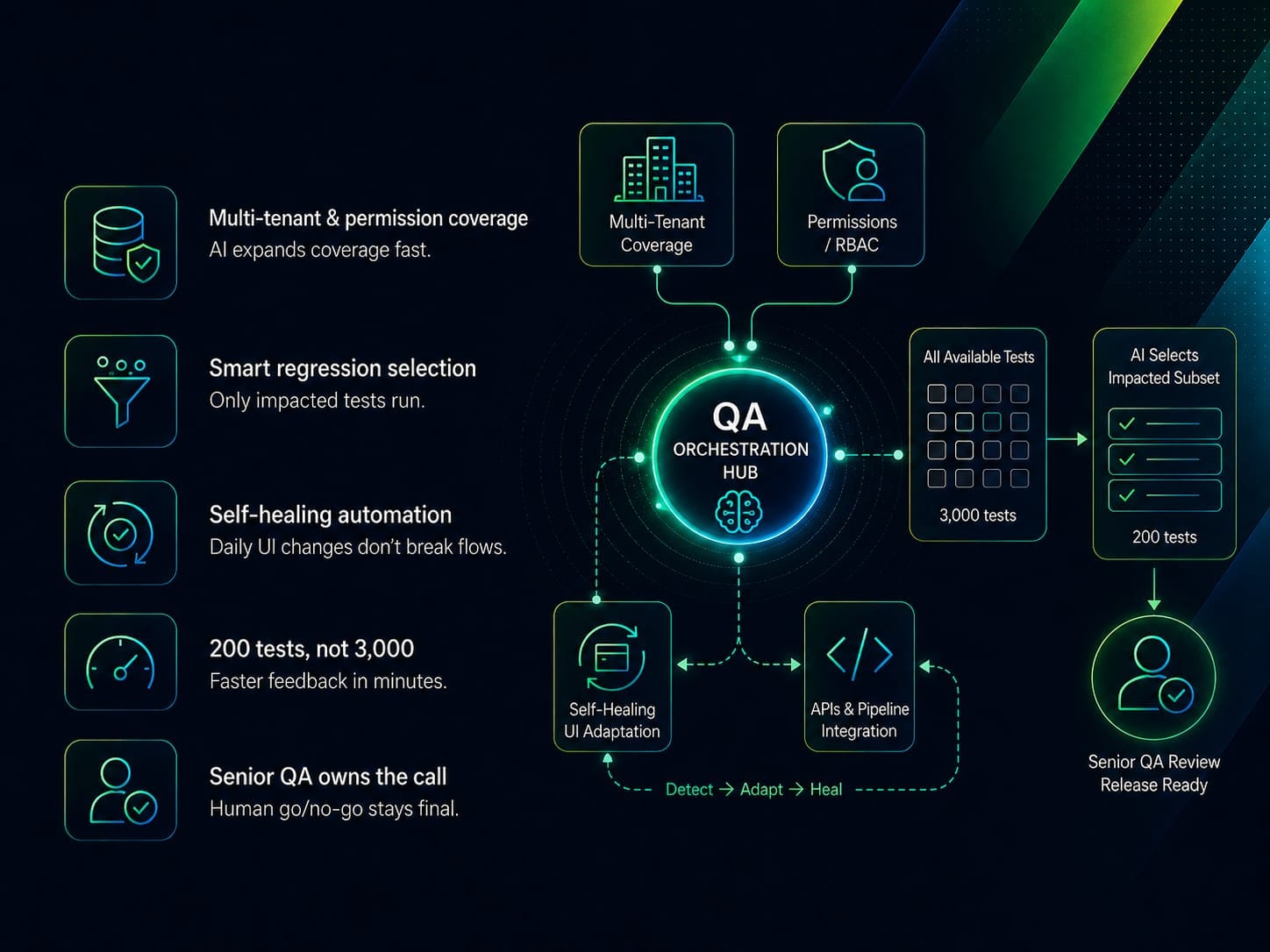
The work that normally drags SaaS QA to a crawl – exhaustive multi-tenant and permission coverage, smart regression selection that runs only the tests a change actually impacts, self-healing automation that survives daily UI iterations – is where we put AI to work. Instead of running 3,000 tests on every merge, AI runs the 200 that matter, in minutes, so QA never blocks your pipeline. But AI never decides if you ship. A senior QA engineer owns release readiness and stands behind every go/no-go.

Accountable for Outcomes

WHY TEAMS STAY

A Partner Held to Outcomes, Not Hours

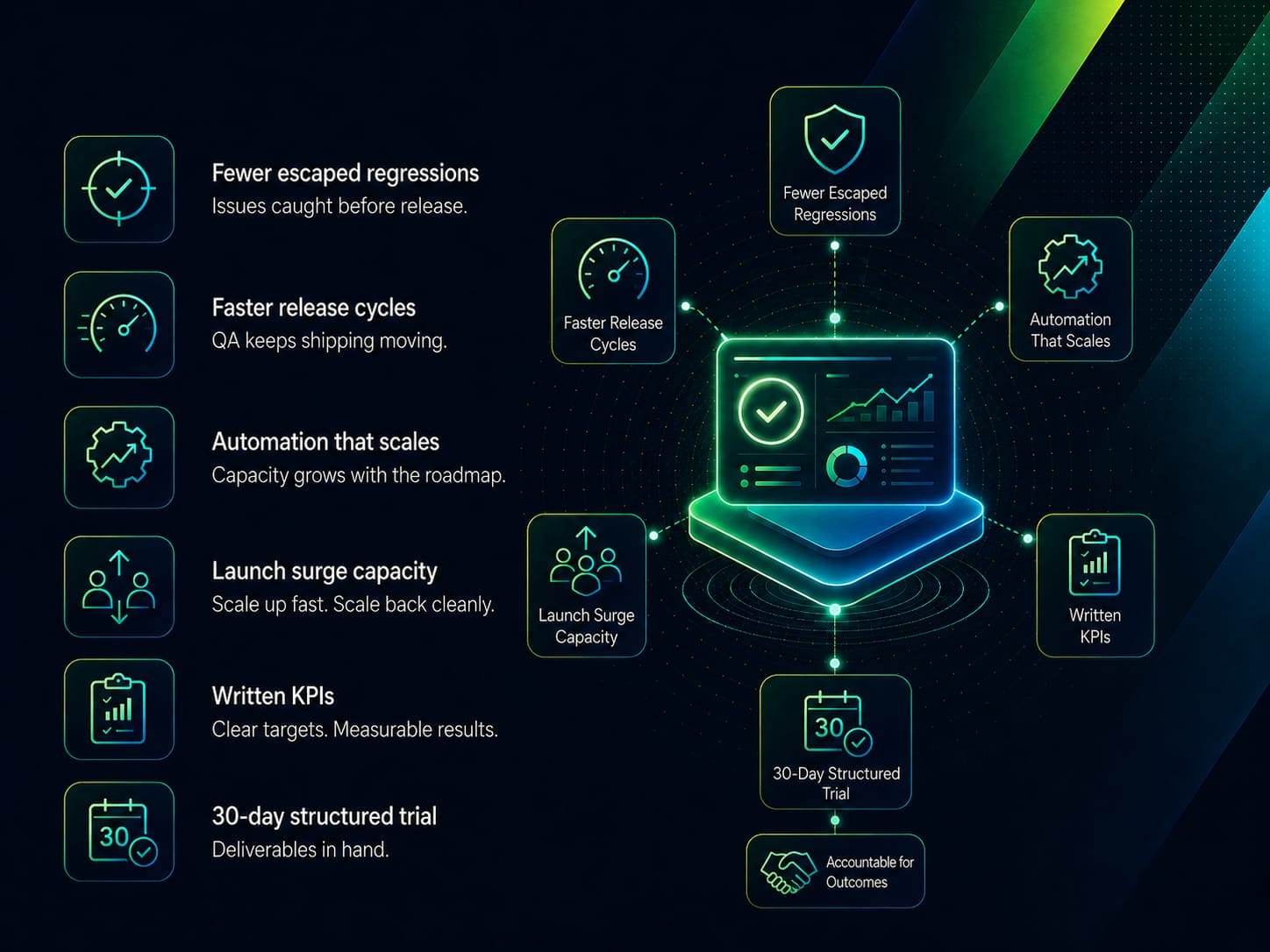
We don’t bill you for test execution – we’re accountable for results: fewer escaped regressions, faster release cycles, automation that scales up or down with your roadmap. Need to triple QA capacity for a launch and scale back after? We’ve done it in days. Every engagement carries written KPIs and starts with a 30-day Structured Trial you can walk away from, deliverables in hand.

FAQ

Tenant isolation failures are among the most damaging SaaS defects – they hit every customer at once. We generate systematic cross-tenant access and permission-boundary tests that would take weeks to write manually, then run them automatically on every release, so no tenant can ever reach data that isn’t theirs.

That’s exactly what we build for. AI-powered test selection identifies the specific tests each code change affects, so meaningful coverage runs in minutes on every merge instead of blocking the pipeline with a full suite. The complete suite still runs on schedule for full confidence.

SaaS UIs iterate fast, and brittle scripts break with every change. We use AI-enhanced locator strategies that identify elements by intent rather than fragile selectors, so automation survives refactors – your engineers build coverage instead of fixing broken tests.

Yes. We model load on your real traffic patterns using k6 and JMeter, validate auto-scaling behavior, and test the multi-tenant scenarios where one tenant’s spike can affect others – so the platform holds up at the volumes enterprise contracts demand.

That’s a core advantage of the model. We’ve scaled engagements from one to three engineers in days for a launch, then back down afterward – no long-term headcount commitment, no layoffs, no hiring lead time.

Days 1–10 cover your architecture, stack, tenancy model, and team rhythm. From day 11 the engineer contributes independently. By day 30 you have a working Playwright framework, the first automated tests live in CI/CD, and a clear picture of the value ahead.

Contractual KPIs: minimum 80% automated coverage of critical functions, at least 30 new automated tests per month, defect reporting within 24 hours, 100% attendance at your Scrum ceremonies, a written report every Friday, and a maximum 4-business-hour response time.

Playwright as primary, Selenium for legacy and enterprise environments, Appium for mobile, and Postman for the API layer enterprise customers rely on. Performance runs through k6 and JMeter, integrated directly into your CI/CD pipeline. AI-enhanced locators keep automation alive through frequent UI changes.

Use cases

  • 5× cheaper

    HR-tech SaaS

    From outside the sprint to inside it

    Before: a freelance tester trailed a sprint behind — bugs arrived late, and developers burned hours re-explaining features. The switch: an Incisive engineer joined their Jira board and their standups, testing in parallel with development. Now: bugs die inside the sprint that created them, and the cost of fixing one has dropped 5× — because staging never sees them.

  • 1 → 3 → 1

    E-learning SaaS

    Capacity that breathes with the roadmap

    Three times the QA capacity, needed in five days, for six weeks — a timeline internal hiring couldn’t touch. We scaled the engagement from one engineer to three, carried the launch without a single QA bottleneck, then scaled back to one. No long-term contracts, no headcount hangover — and the launch shipped on time.

  • Due diligence

    Series A

    What due diligence asked — and what they saw

    Investors wanted proof: real test coverage, a documented QA process, release discipline. The team had thirty days and none of it written down. We delivered a QA audit, test plan, documentation, and an initial automation suite running in CI — inside the window. Due diligence closed without a single QA comment, and the process itself was cited as a signal of team maturity.

Form Image

Ready to Boost Product Quality?

Requests are reviewed within 48 hours. We’ll follow up with next steps.