Travel and Hospitality
FAQ
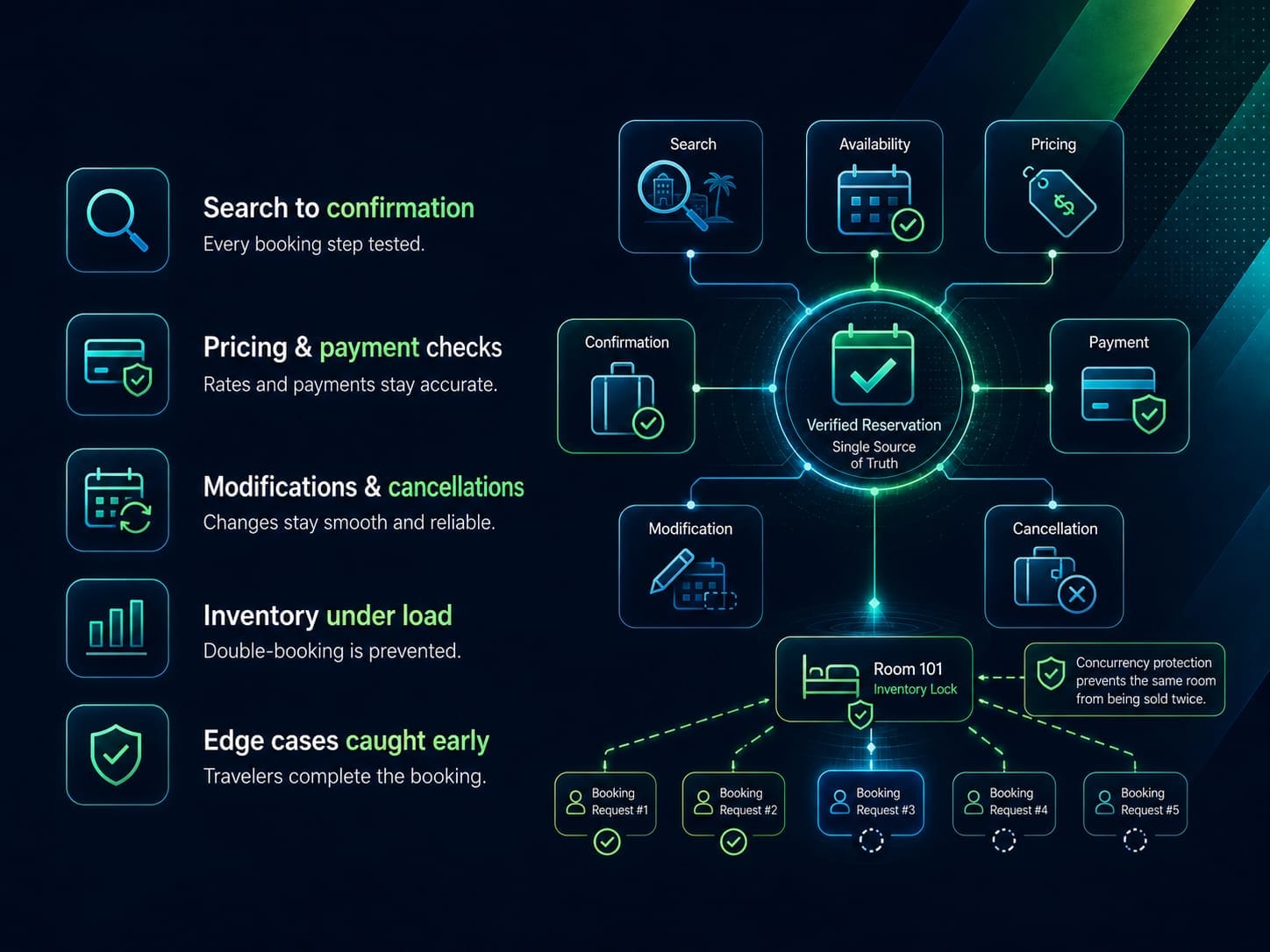
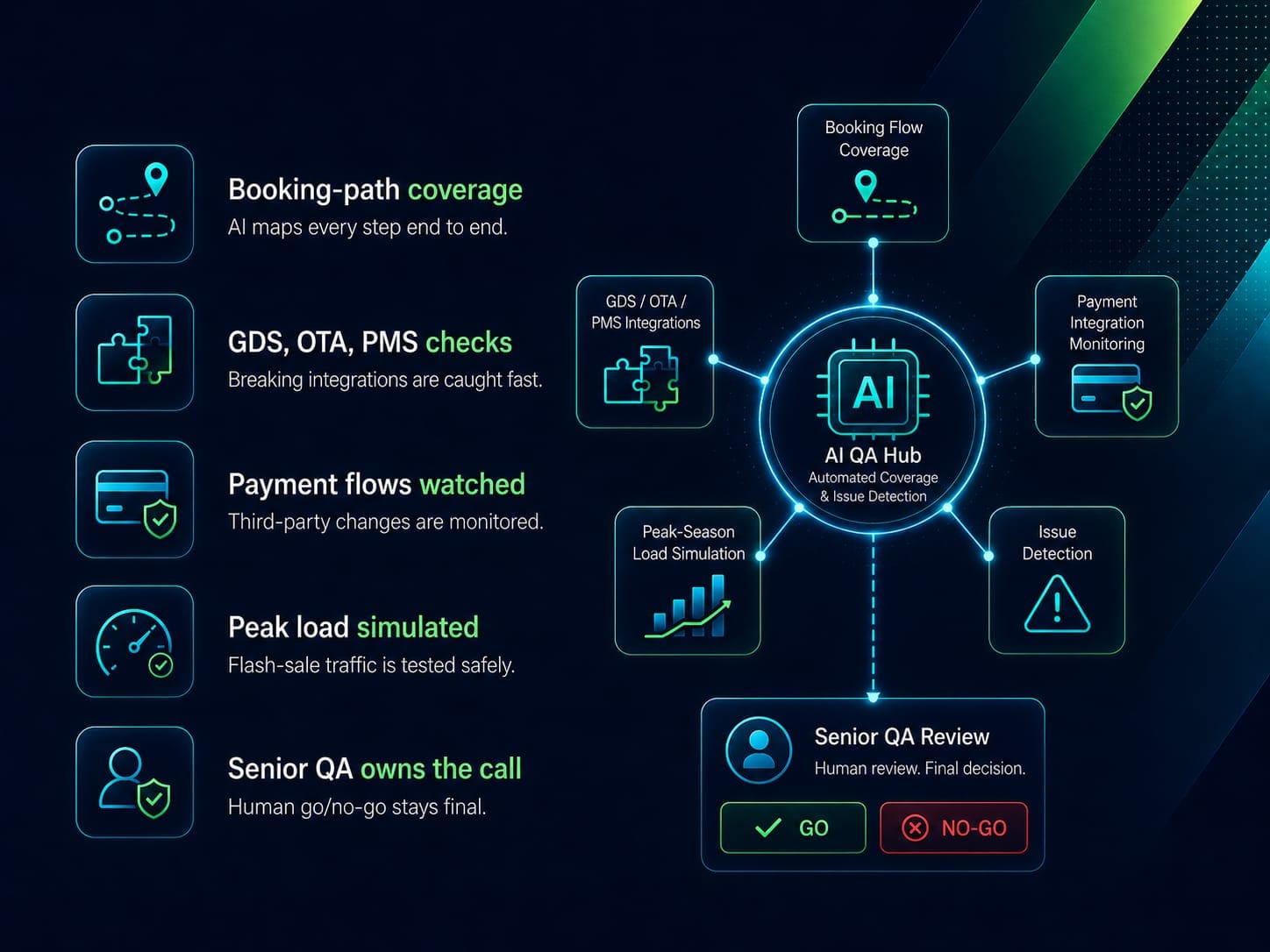
We validate the full journey end to end – search, availability, pricing, payment, confirmation, modification, and cancellation – across your GDS, OTA, PMS, channel manager, and payment integrations. AI generates exhaustive path coverage including the failure modes manual design misses, and AI-monitored contract testing flags a breaking change in any third-party API within minutes of a new build, not in production.
With concurrency and race-condition testing. Overbooking almost always comes from inventory that syncs too slowly between systems – a room sold on one channel that takes seconds or minutes to reflect everywhere else. We simulate simultaneous bookings against shared inventory to surface those race conditions before they cost you a guest and a refund.
Yes. We model load on your actual traffic patterns – seasonal spikes, flash sales, the Monday-morning surge – using k6 and JMeter, then validate search speed, checkout response, and recovery after API timeouts under that load. The point is simple: the system holds up exactly when the most revenue is on the line.
We do. We validate currency conversion and formatting, locale-specific UI and date formats, regional tax and fare rules, and dynamic pricing logic across your target markets – the edge cases that quietly break checkout for international travelers.
That’s exactly where we focus. We test across real iOS and Android devices, screen sizes, and network conditions including weak connectivity, so the booking experience holds up where most travelers actually are – not just on a desktop in a test lab.
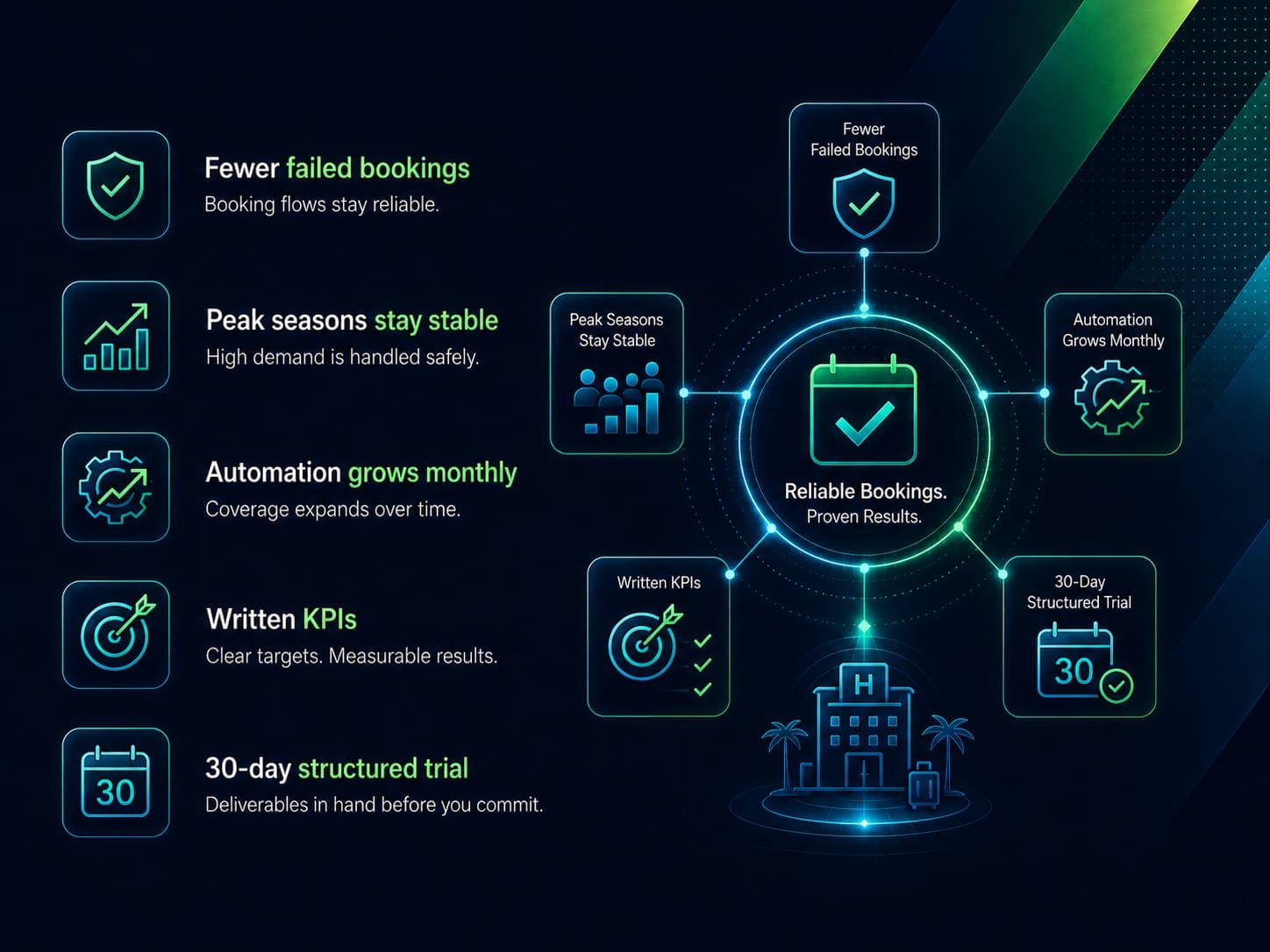
Days 1–10 cover your architecture, stack, booking logic, integrations, and team rhythm. From day 11 the engineer contributes independently. By day 30 you have a working Playwright framework, the first automated tests live in CI/CD, and a clear picture of the value ahead.
Contractual KPIs: minimum 80% automated coverage of critical functions, at least 30 new automated tests per month, defect reporting within 24 hours, 100% attendance at your Scrum ceremonies, a written report every Friday, and a maximum 4-business-hour response time.
Playwright as primary, Selenium for legacy and enterprise environments, Appium for mobile, and Postman for the API layer that carries most travel risk. Performance runs through k6 and JMeter. AI-enhanced locators keep automation alive through UI changes without a maintenance sprint.
Use cases