Automated Testing
FAQ
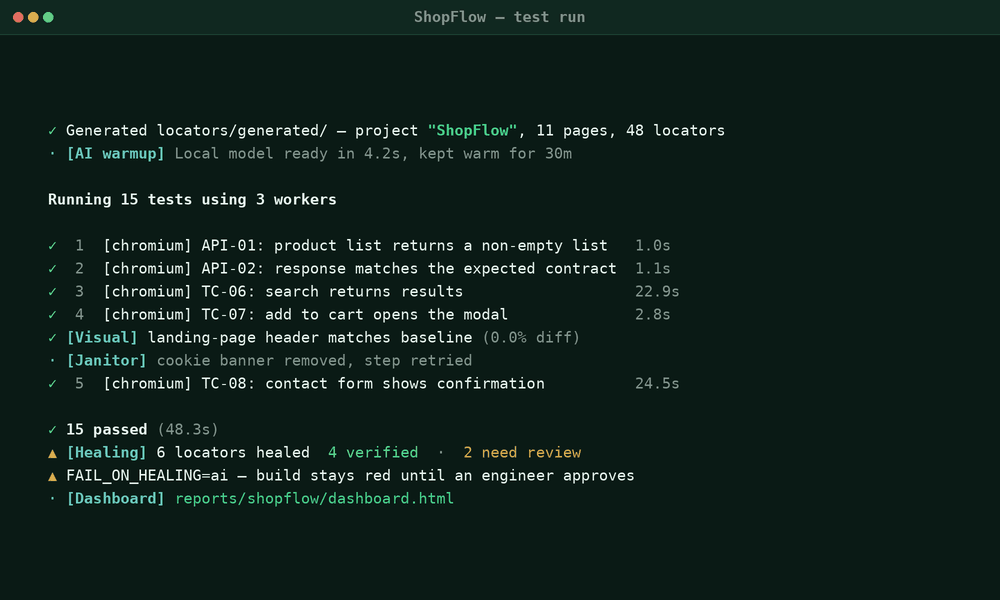
Usually, yes. We start with an assessment of your existing suite, identify what’s worth keeping, and rebuild the brittle parts with AI-enhanced, self-healing locators. Most teams whose suite is breaking faster than it grows don’t need a rewrite – they need a maintainable architecture and the self-healing layer on top.
Playwright is our default for modern web apps: faster, cross-browser, parallelized out of the box. We use Selenium and Selenium Grid where legacy systems or enterprise environments require it, and Appium for mobile. We pick the right tool for your stack rather than forcing one framework on every project.
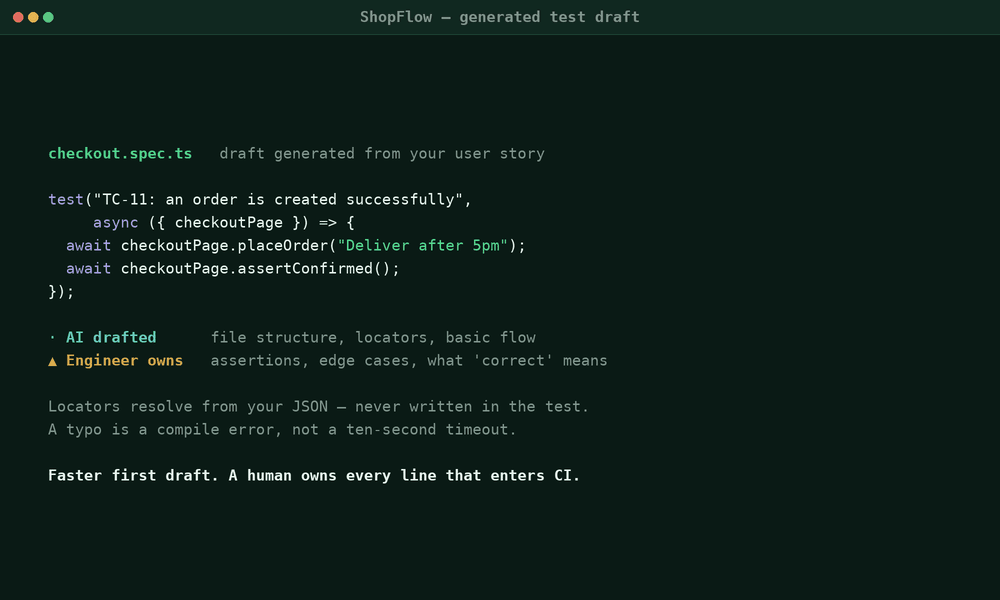
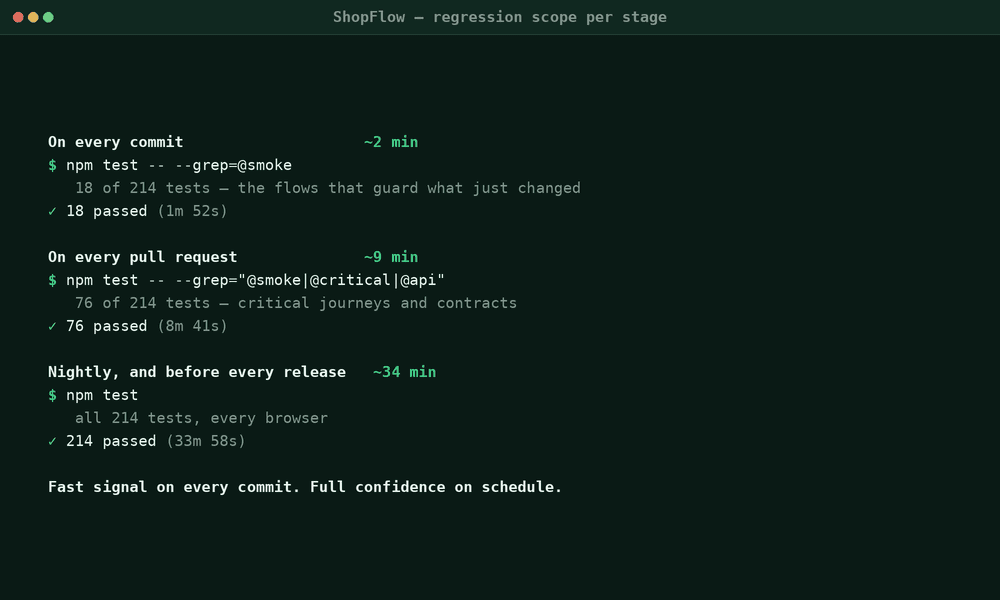
Fair skepticism. Specifically: AI generates test cases from your user stories, self-healing locators keep scripts alive through UI changes, AI selects the regression subset impacted by each change, and AI flags flaky-test patterns for elimination. The engineer reviews and owns every decision – AI accelerates the work, it doesn’t replace the judgment.
You own everything. Tests are written in standard Playwright, Selenium, and Appium – open source, exportable, documented. If we ever part ways, you keep the entire suite and the framework. No proprietary platform, no lock-in.
First automated tests typically run in your pipeline within the first two weeks. By day 30 you have a working framework live in CI/CD with Smoke coverage on critical flows, and we target 80%+ automated coverage of critical functions within 60 days.
Never per hour. You pay a fixed monthly rate for a dedicated senior QA engineer embedded in your team, with contractual deliverables: coverage targets, 30+ new tests a month, bug reporting within 24 hours, and weekly reports. You’re paying for release stability and a guaranteed output, not for clocked hours.
Use Cases