
Manual Testing

Manual Testing

Human judgment that finds what scripts can’t

AI Runs the Tests You Can Predict. Our Engineers Find the Bugs You Can’t

There’s a fashionable claim that AI has made manual testing obsolete. It hasn’t – and the data agrees: experienced testers rank AI as their top priority for 2026, yet two out of three say they’d only trust AI-generated tests with a human reviewing them. Here’s the real division of labor. AI is exceptional at the predictable: running the same regression, checking the same flows, executing scripted logic at scale. It’s blind to everything else – whether the product actually makes sense to a confused first-time user, whether a workflow that passes every assertion still feels broken, whether the edge case nobody scripted is about to take you down. That’s human work. At Incisive, AI clears the repetitive load so our senior engineers spend their time where machines can’t go: thinking like your users, questioning your assumptions, and breaking your product on purpose.

Where Human Judgment Wins

Some defects don’t live in the requirements, so no script – written by a human or generated by AI – will ever look for them. That’s the gap our engineers own. Usability testing asks the question automation can’t even parse – not “does it work?” but “would a real person understand it?” We test as personas: the first-time user who’s lost, the power user who abuses every shortcut, the admin with dangerous permissions, the frustrated customer who taps the wrong thing twice. And increasingly, we validate AI’s own output, because AI-generated tests and features need a human to confirm they actually do what they claim.

Explo Think

EXPLORATORY TESTING

The Bugs That Matter Most Are Never in the Test Plan

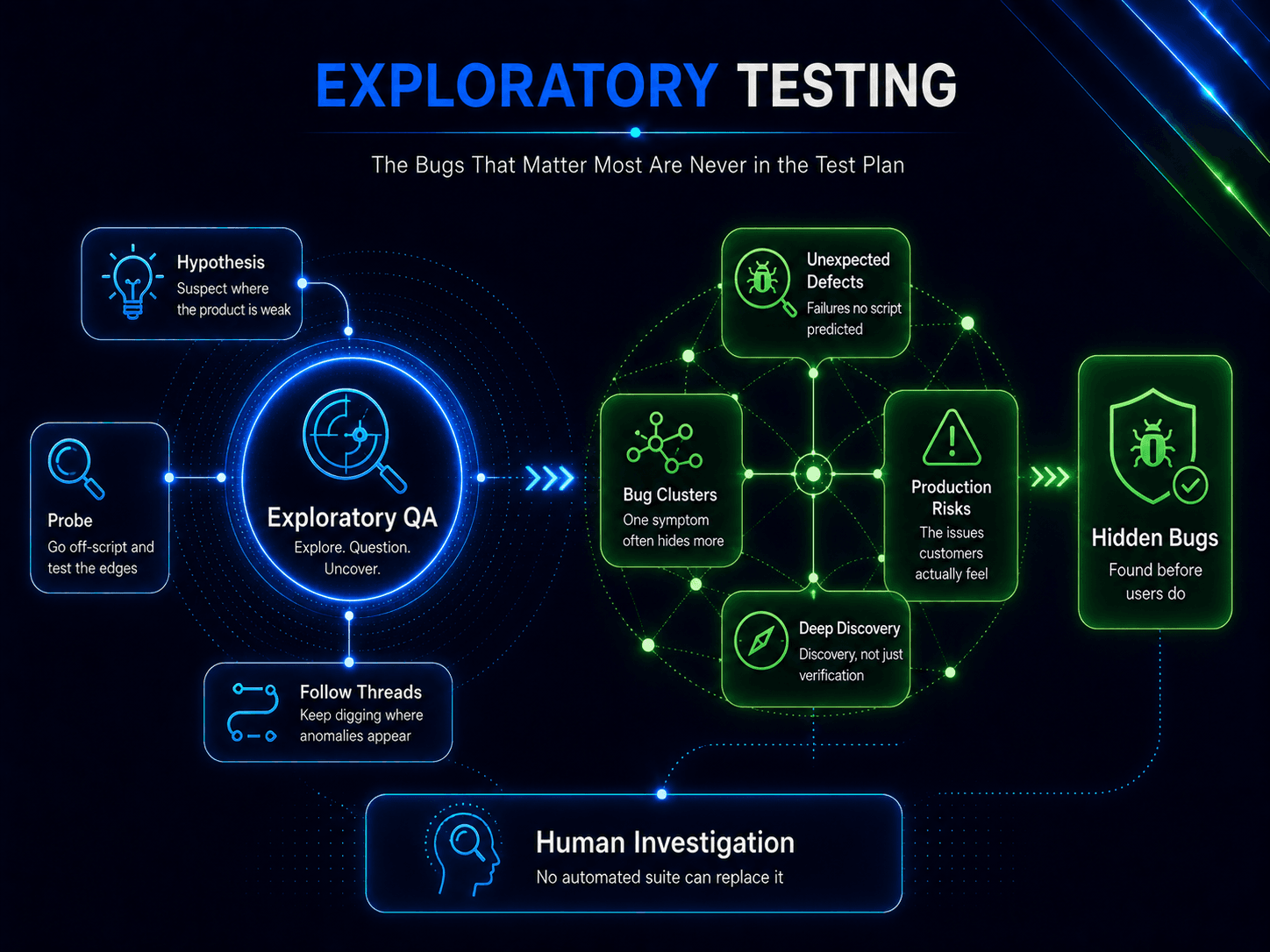
Scripted tests can only find the failures someone already imagined. The defects that reach production – and the ones that cost you customers – are the ones nobody thought to write down. Exploratory testing is our engineers deliberately going off-script: forming a hypothesis about where the product is weak, probing it, and following every thread. When they find a defect, they cluster around it, because bugs rarely exist alone – one symptom usually sits next to three more. This is discovery, not verification, and it’s exactly what no automated suite can do for you.

Usability (2)

USABILITY & UX VALIDATION

“It Works” and “It Makes Sense” are Two Different Tests

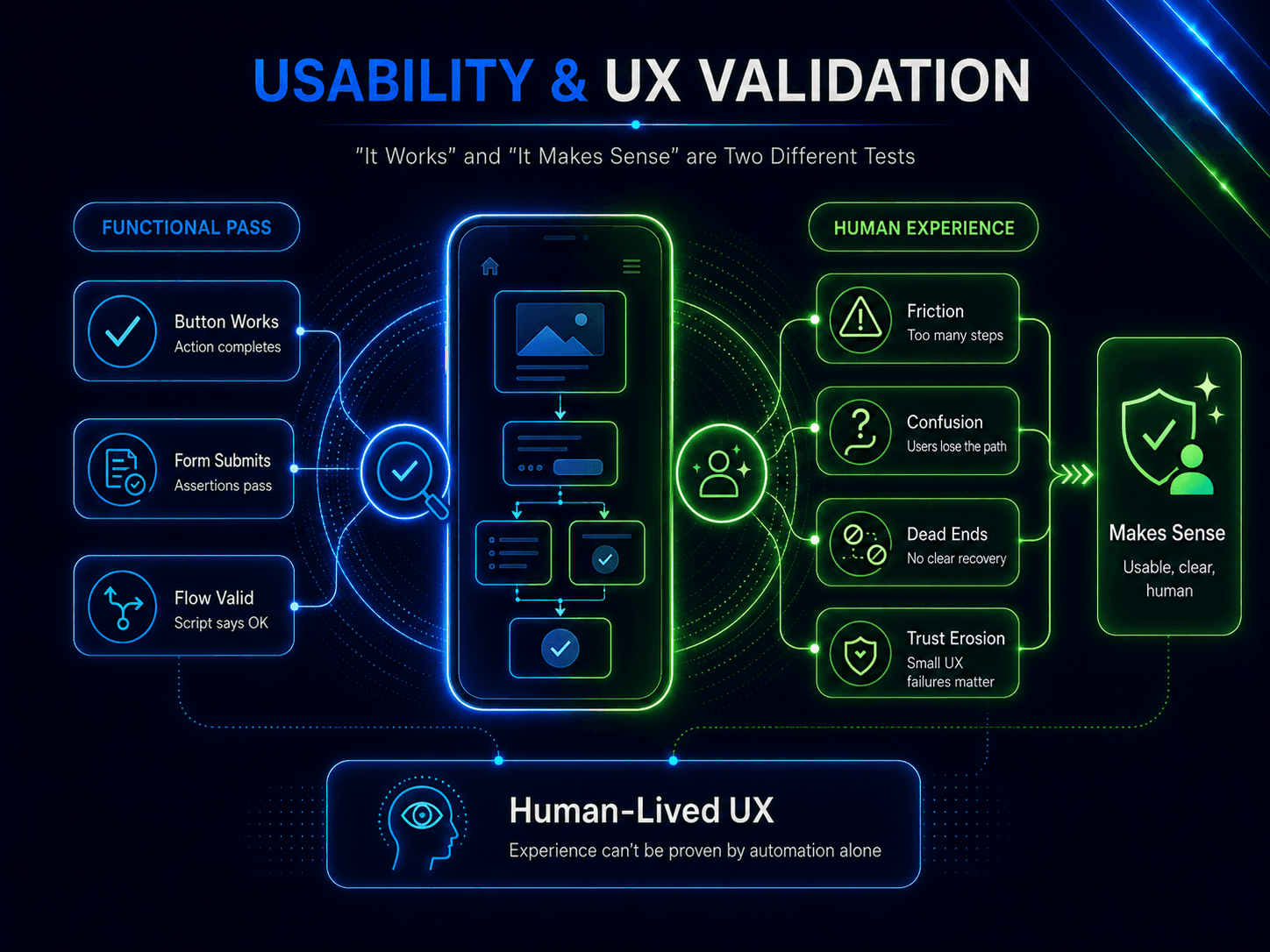
A feature can pass every functional assertion and still confuse, frustrate, or quietly lose the user. Automation can confirm a button submits a form; it cannot tell you the flow is so convoluted that real users abandon it halfway. Our engineers evaluate the experience the way a human actually lives it – friction, confusion, dead ends, and the small UX failures that erode trust without ever throwing an error. You ship products that don’t just function, but make sense to the people using them.

Persona Driven Testing

PERSONA-DRIVEN TESTING

We Test as the Users Who Break Things

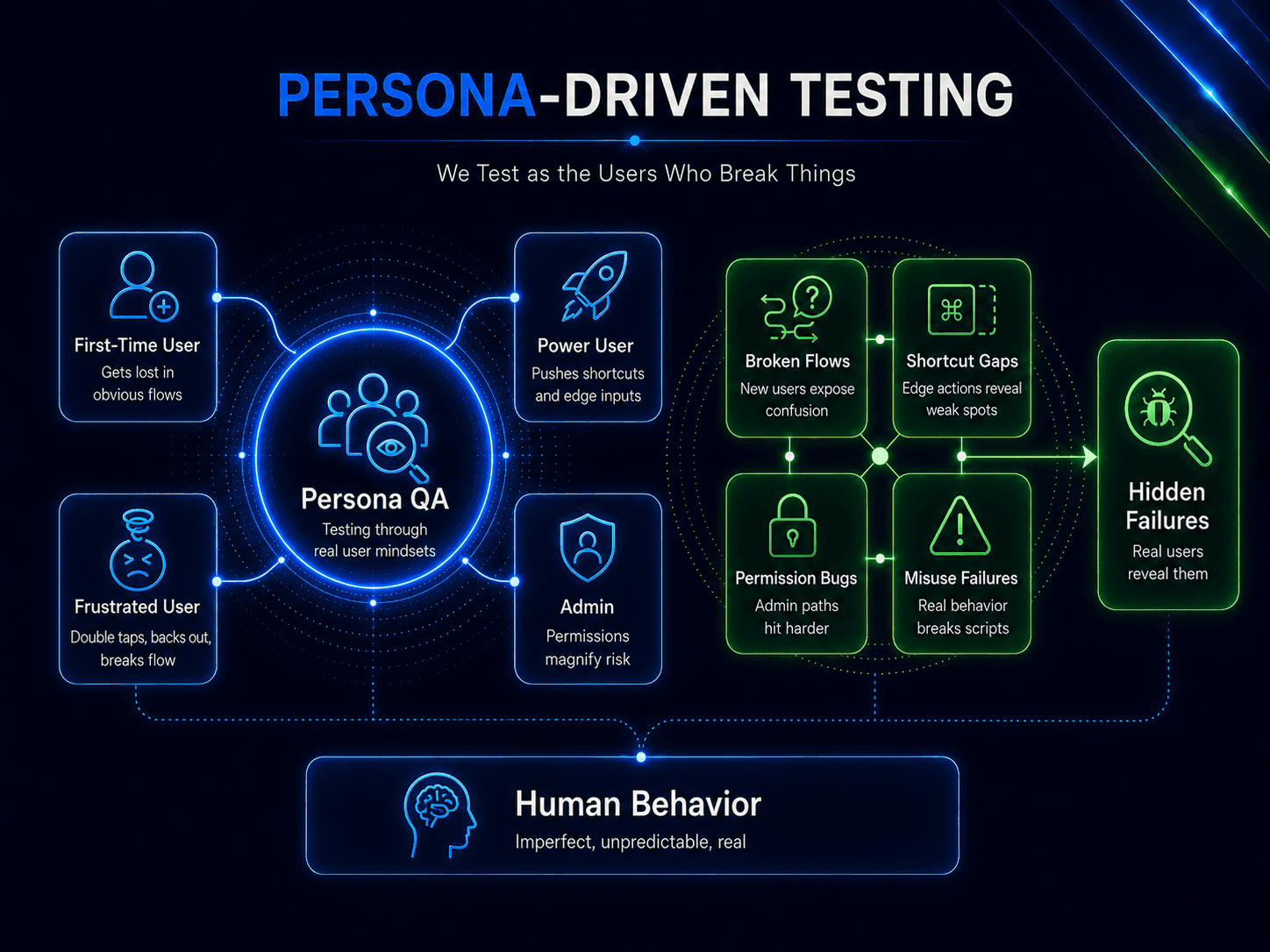
Different users destroy software in different ways. The first-time user gets lost in a flow your team finds obvious. The power user abuses shortcuts and edge inputs nobody planned for. The admin holds permissions that turn a small bug into a serious one. The frustrated customer double-taps, hits back mid-transaction, and does the “wrong” thing constantly. We deliberately adopt these mindsets and attack your product from each, surfacing failures that only appear when someone uses the app like a real, imperfect human – not like a test script.

Ai Assist Human

AI-ASSISTED, HUMAN-OWNED

AI Clears the Busywork. The Engineer Owns the Judgment

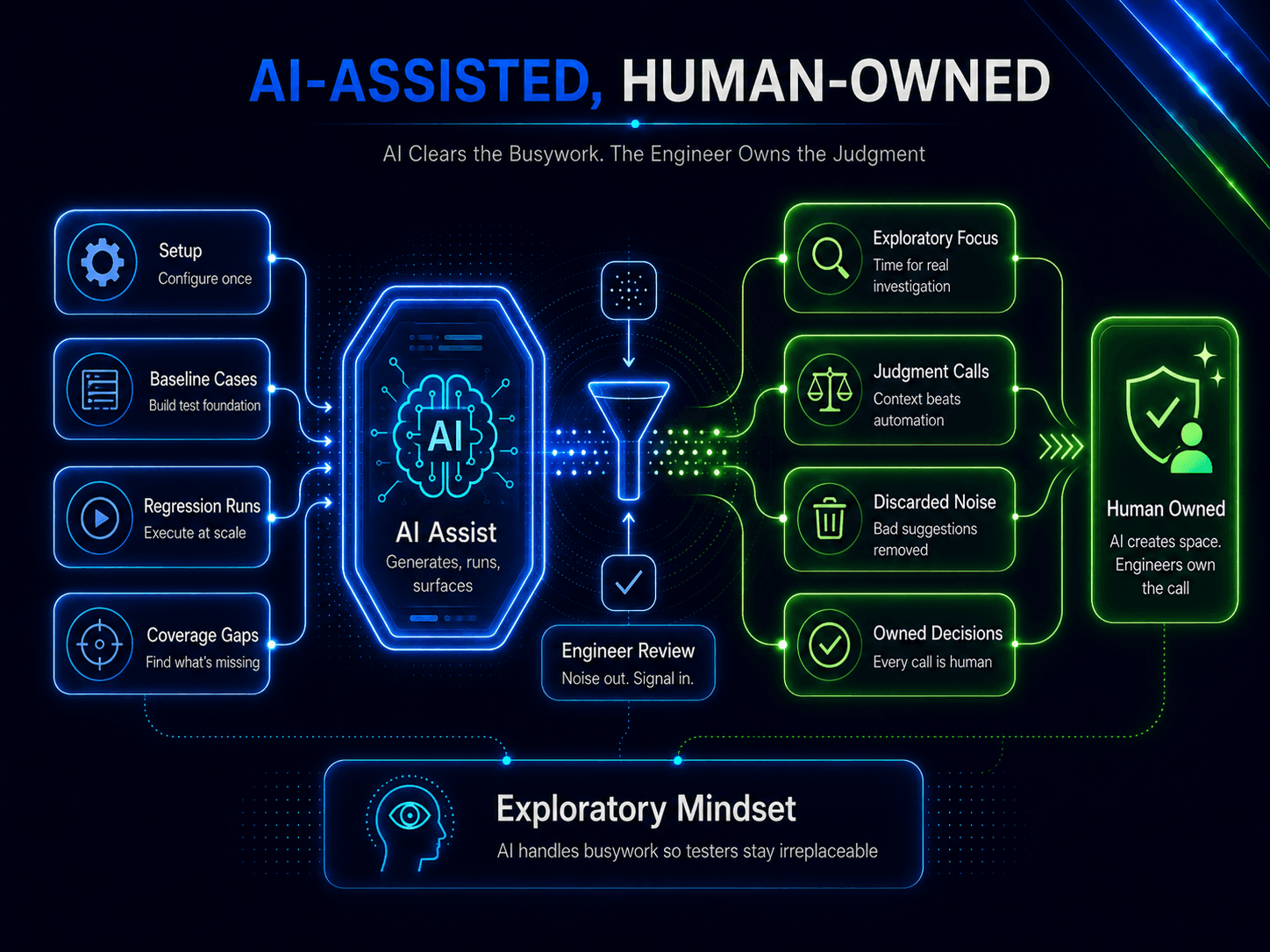
Manual testing slows to a crawl when engineers drown in setup, documentation, and repetitive regression. So we hand that to AI: it generates baseline test cases from your requirements and designs, handles the predictable regression passes, and surfaces coverage gaps to investigate. That’s not replacing the tester – it’s freeing them to stay in the exploratory mindset where they’re irreplaceable. The engineer reviews every AI suggestion, discards the noise, and owns every call. AI creates the space; human judgment fills it.

Senior Led

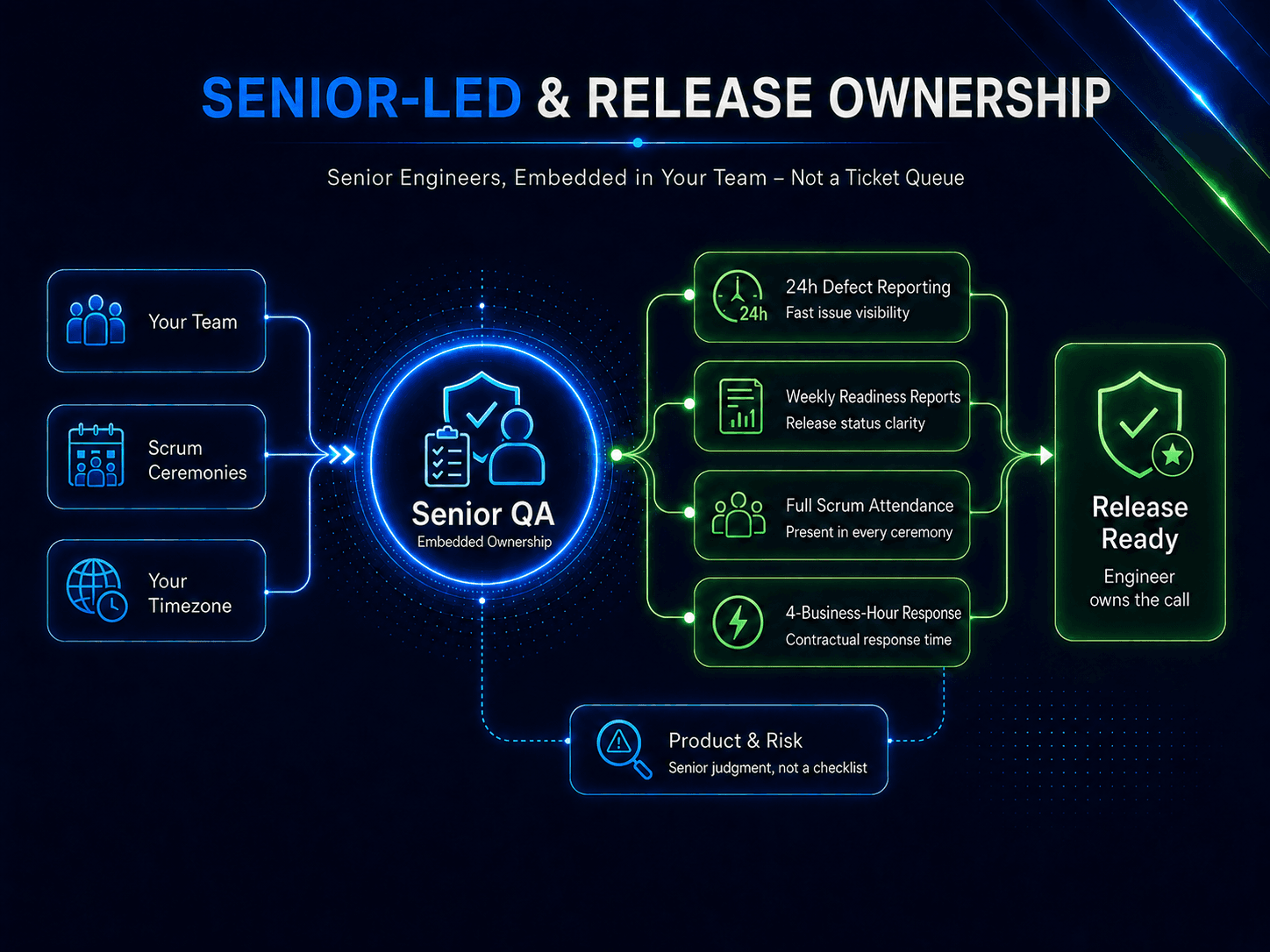
SENIOR-LED & RELEASE OWNERSHIP

Senior Engineers, Embedded in Your Team – Not a Ticket Queue

Manual testing is only as good as the person doing it, which is why we don’t staff it with juniors working through a checklist. You get senior QA engineers who understand product and risk, embedded in your team, in your ceremonies, in your timezone. And it comes with the same Release Ownership as everything we do: defects reported within 24 hours, weekly readiness reports, full Scrum attendance, and a 4-business-hour response time – all contractual. You’re not submitting tickets into an offshore void; you have an engineer who owns whether your release is genuinely ready.

FAQ

No – and the people closest to it agree. Experienced testers rank AI as a top priority yet overwhelmingly insist on human review of anything it produces. AI handles the predictable: scripted regression, repetitive checks. It can’t evaluate usability, understand business intent, or find the edge case nobody imagined. Those need a human, and they’re where the costly bugs hide.

Use automation for anything stable and repetitive – regression, smoke checks, cross-browser passes. Use manual for exploratory testing, usability and UX evaluation, brand-new features still in flux, and complex workflows where human judgment beats scripted assertions. The right answer is almost always both, applied where each is strongest – and we’ll tell you which is which for your product.

AI does the work that drags manual testing down: generating baseline test cases, running predictable regression, drafting documentation, and flagging coverage gaps. That frees our engineers to stay in the exploratory, judgment-driven mode where humans win. The engineer reviews and owns every decision – AI is the assistant, never the authority.

Senior QA engineers. Manual testing’s entire value is the quality of judgment behind it, so staffing it with juniors defeats the purpose. Our engineers understand product context and risk, and they’re embedded in your team rather than processing tickets from a distance.

Clear, reproducible defect reports within 24 hours, exploratory session findings, usability and UX issues with severity and context, and a written readiness report every Friday. You get prioritized, actionable findings – not a raw bug dump you have to triage yourself.

Yes – that’s exactly where manual shines. Early-stage features still changing shape are wasteful to automate and ideal to test by hand. We validate them manually now, then help decide what’s stable enough to automate later, so automation effort goes only where it pays off.

Never per hour. Manual testing is part of a dedicated QA engagement at a fixed monthly rate with contractual deliverables: defect reporting within 24 hours, weekly reports, Scrum attendance, and a guaranteed response time. You pay for senior judgment and release confidence, not for clocked hours.

Testimonials

  • Anna

    CTO, eCommerce

    “Their exploratory testing found a checkout edge case our automated suite sailed right past for months – a specific sequence real users hit constantly. That one bug was costing us conversions every single day.”

    5.0 rating
  • Derek

    VP Engineering, B2B SaaS

    “We brought them in to test features too new and fast-moving to automate. Having senior engineers think like our actual users – instead of juniors running a checklist – changed what ‘tested’ even means for us.”

    4.0 rating
  • Lucile

    Head of Product,

    “What sold us was the balance: AI handles our regression, their engineers spend their time on usability and the weird edge cases. We stopped shipping things that technically worked but confused everyone who used them.”

    5.0 rating
Form Image

Ready to Boost Product Quality?

Requests are reviewed within 48 hours. We’ll follow up with next steps.