Healthcare and MedTech

AI-Augmented QA for Healthcare Software

In Healthcare, You Don’t Ship Bugs. You Ship Exposed Patient Data, Broken Clinical Workflows, and Risk to Patient Safety.

A lab result that gets garbled as it moves between two systems, a medication order that silently goes missing during an integration, a gap in the record of who accessed what – in healthcare, these aren’t tickets. They’re patient-safety incidents, regulatory exposure, and a loss of trust you can’t buy back. Incisive QA brings AI-augmented quality assurance engineered for the precision and accountability healthcare demands: testing that protects patient data, keeps your systems exchanging records correctly, covers the clinical workflows that matter most, and never compromises on security.


4

WHAT WE TEST

From System Integrations to Clinical Workflows to Audit Trails

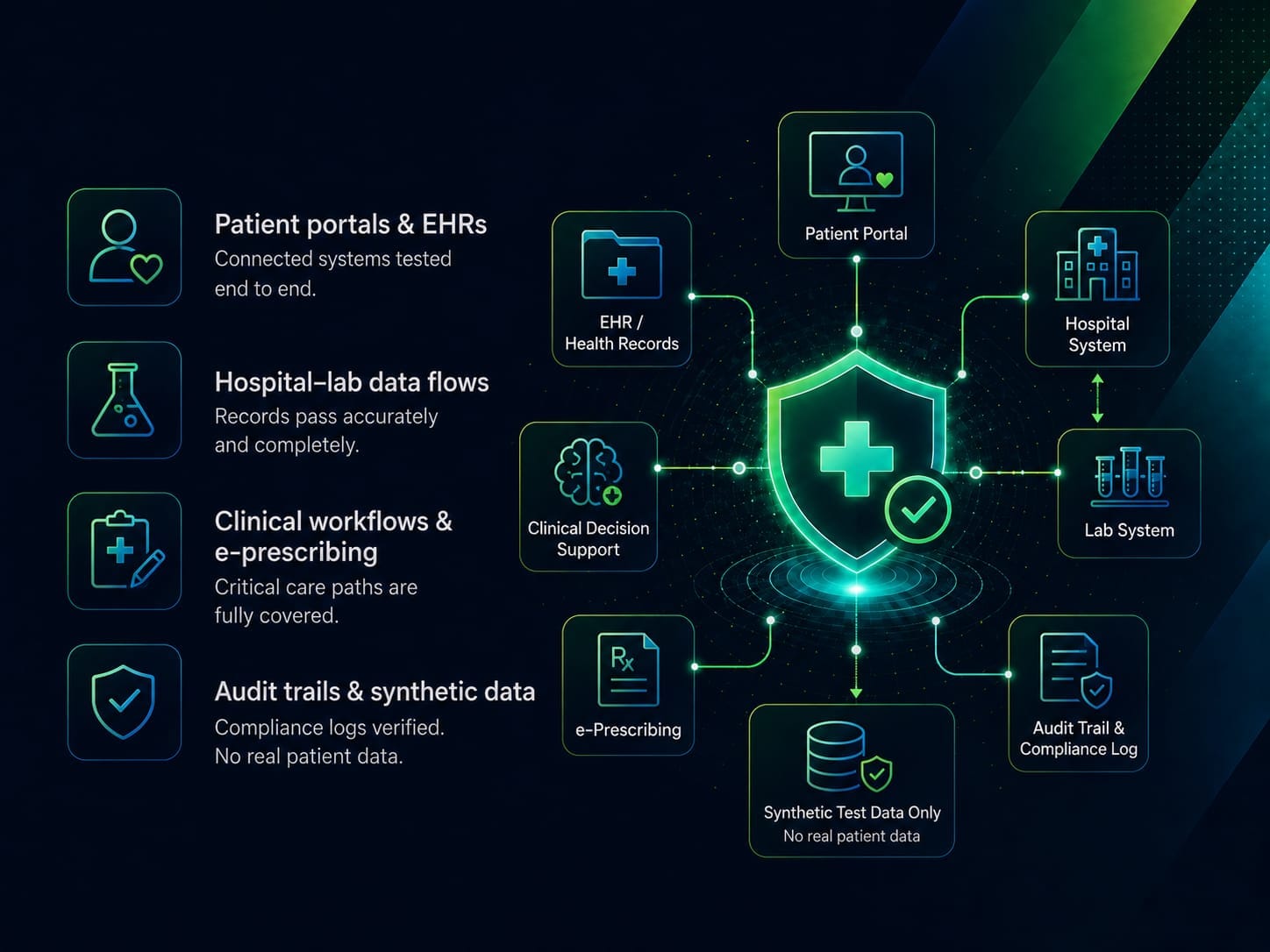
Patient portals, electronic health record integrations, the interfaces that move patient data between hospital and lab systems, clinical decision support, electronic prescribing – wherever a healthcare platform can break, we test it. Our engineers validate that records pass between systems accurately and completely, cover the clinical workflow paths most teams under-test, and verify that every sensitive action is logged correctly for compliance – all against synthetic test data, never real patient records.

5

WHERE AI EARNS ITS PLACE

AI Does the Heavy Lifting. Engineers Make the Call

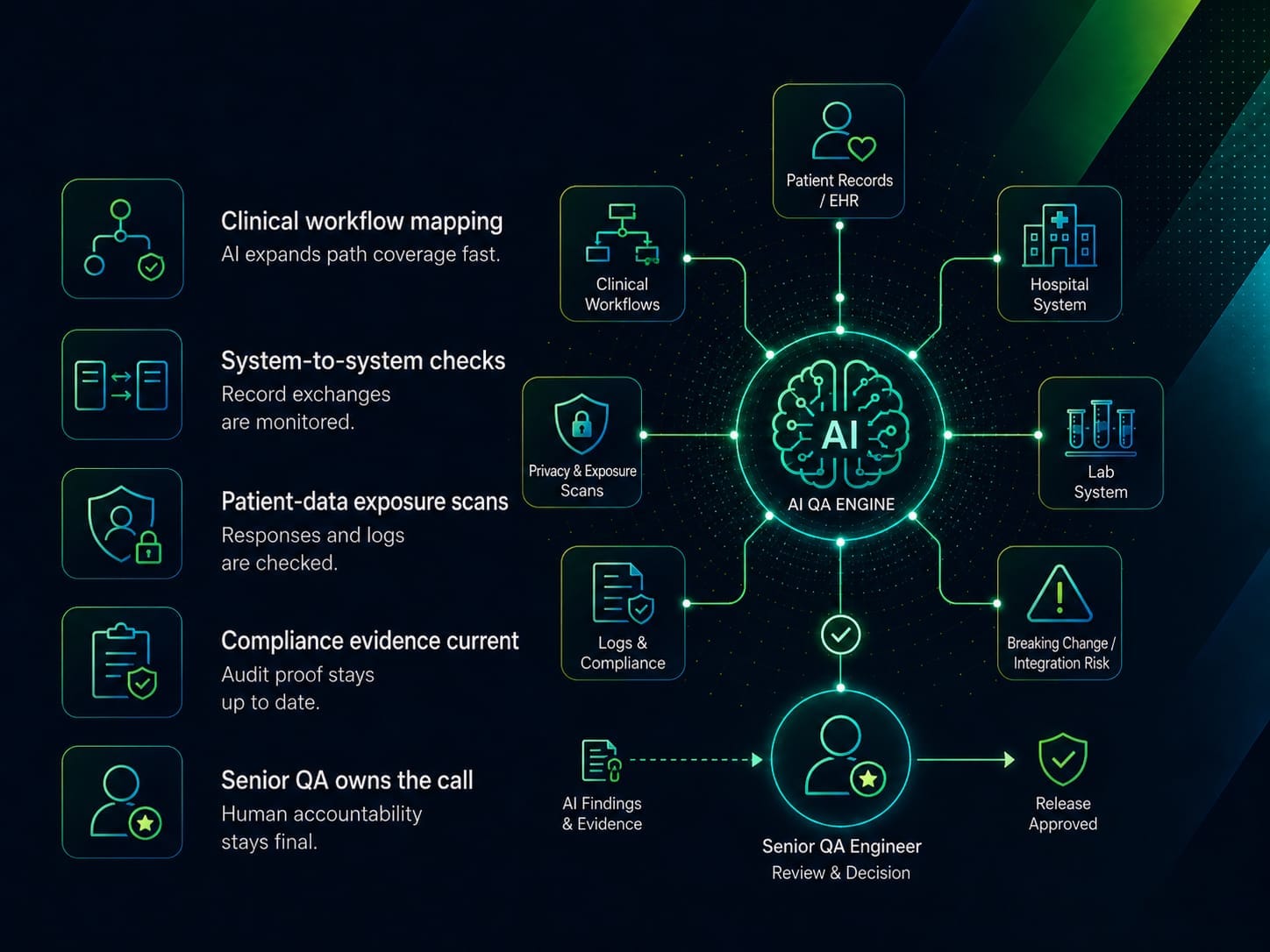
The work that normally drags healthcare QA to a crawl – mapping every clinical workflow path, building coverage for the interfaces that exchange patient records between systems, scanning for accidental exposure of patient data in responses and logs, keeping compliance evidence up to date – is where we put AI to work. A breaking change in a health-record or lab integration gets flagged within minutes of a build, not after a clinician notices a wrong result. But AI never makes the clinical or release call. A senior QA engineer owns readiness and takes full accountability for every decision.

6

WHY TEAMS STAY

Built for the Trust Healthcare Demands

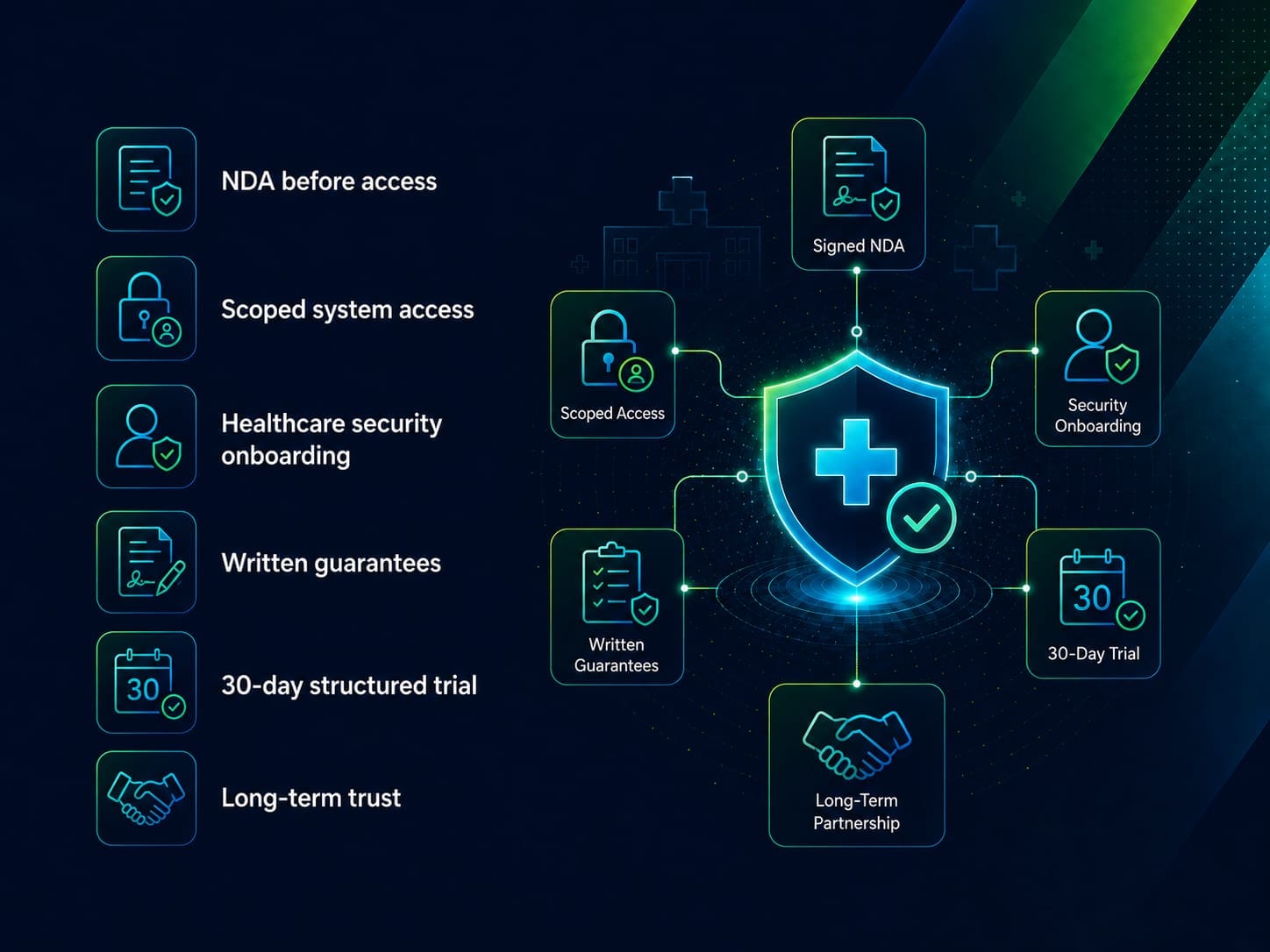
Healthcare teams don’t hand over access to medical data and code lightly – and they shouldn’t. We start with a signed non-disclosure agreement before the first real conversation, limit access to only the systems we genuinely need, and run a structured security onboarding built for healthcare requirements. Every engagement carries written performance guarantees and starts with a 30-day Structured Trial you can walk away from. It’s why our healthcare engagements tend to run for years, not sprints.

FAQ

We never test against real patient data. Healthcare engagements run only on synthetic test data that mirrors real clinical structures and edge cases – without exposing a single piece of protected health information. We also scan responses, logs, and error messages for any accidental patient-data exposure, so sensitive information never leaks through the testing process itself.

Yes. We map test coverage to the relevant HIPAA and GDPR requirements, validate data encryption, access logging, and the integrity of audit trails, and keep that evidence current as your product changes. Compliance testing doesn’t replace a formal audit – but it makes your compliance posture verifiable and sharply reduces the risk of findings during one.

We validate that the messages moving between systems have the right structure and that every field maps correctly to the receiving system, then test the full workflow from data entry through to how the connected system processes it. Automated contract monitoring flags a breaking change in any health-record, lab, or imaging integration within minutes of a build – before it spreads to other systems.

Clinical workflows – patient intake, decision support, prescription management, care coordination – involve hundreds of possible path combinations that no manual effort can fully cover. We use AI to map those paths and generate systematic coverage for the edge-case sequences that matter clinically, so the dangerous gaps don’t slip through.

That’s the most common and most reasonable concern healthcare teams raise. We address it head-on: a signed non-disclosure agreement before the first real conversation, access limited to only the systems strictly needed, full data-protection documentation, and a structured security onboarding built for healthcare. Most clients tell us the process was more rigorous than they expected – in the best way.

The first ten days cover your architecture, technology stack, clinical domain, integrations, and team rhythm. From day eleven the engineer contributes independently. By day thirty you have a working automation framework, the first automated tests running in your build pipeline, and a clear picture of the value ahead.

Written performance guarantees: a minimum of 80% automated coverage of critical functions, at least 30 new automated tests every month, defect reporting within 24 hours, full attendance at your Scrum ceremonies, a written status report every Friday, and a maximum four-business-hour response time on written queries.

Playwright as our primary framework, Selenium for legacy and enterprise environments, Appium for mobile, and Postman for the data-exchange interfaces between systems. Performance and load testing run through k6 and JMeter. AI-enhanced element recognition keeps automation working through the interface changes that regulatory and usability updates bring.

Testimonials

  • Thomas

    Head of Engineering, HealthTech Platform

    “We’d refused outsourcing for years – the fear of giving access to medical data and code felt too big. The process they ran was more rigorous than we expected, in the best way. Non-disclosure agreement up front, access scoped tightly, security onboarding done properly. We’ve been working together 18 months and counting.”

    5.0 rating
  • Nicholas

    CTO, Digital Health Platform

    “Our integrations were the real risk – that’s where a wrong result or a dropped order hides. They built full coverage across the interfaces that move our patient data and caught three critical bugs before the release. Zero integration incidents in production since.”

    5.0 rating
  • Manuel

    VP Engineering, Patient Care Software

    “They didn’t need us to explain what HIPAA, record exchange, or clinical workflow validation meant – they already knew. The engineer was embedded in our sprint within two weeks, and the audit-ready documentation they keep has saved us enormous compliance prep time.”

    5.0 rating
Form Image

Ready to Boost Product Quality?

Requests are reviewed within 48 hours. We’ll follow up with next steps.