
Security Testing

Security Testing

Continuous security embedded in your release cycle

Security That Runs on Every Build – Not Once a Year When the Audit Is Due

Most teams test security the same way: a penetration test once a year, a scramble before an audit, and silence in between. But your code ships every week – and every release is a new chance to introduce an injection flaw, a broken access control, or an exposed endpoint. We close that gap. Incisive embeds security testing directly into your QA cycle, so vulnerabilities are caught on the build that creates them, not twelve months later when an attacker – or an auditor – finds them first. This isn’t a replacement for your annual pentest. It’s the continuous layer that keeps you secure, and audit-ready, in between.

Where We Focus

We test against the OWASP Top 10 – broken access control, injection, authentication failures, security misconfiguration, and the rest of the risks that account for the majority of real-world breaches. We validate your API layer, where most modern applications quietly expose data. We run authenticated and unauthenticated scenarios, check session and token handling, and verify that sensitive data is protected in transit and at rest. And we map findings to the compliance frameworks your industry answers to – PCI-DSS, HIPAA, SOC 2, ISO 27001, and GDPR – so you walk into an audit already prepared, not scrambling.

10

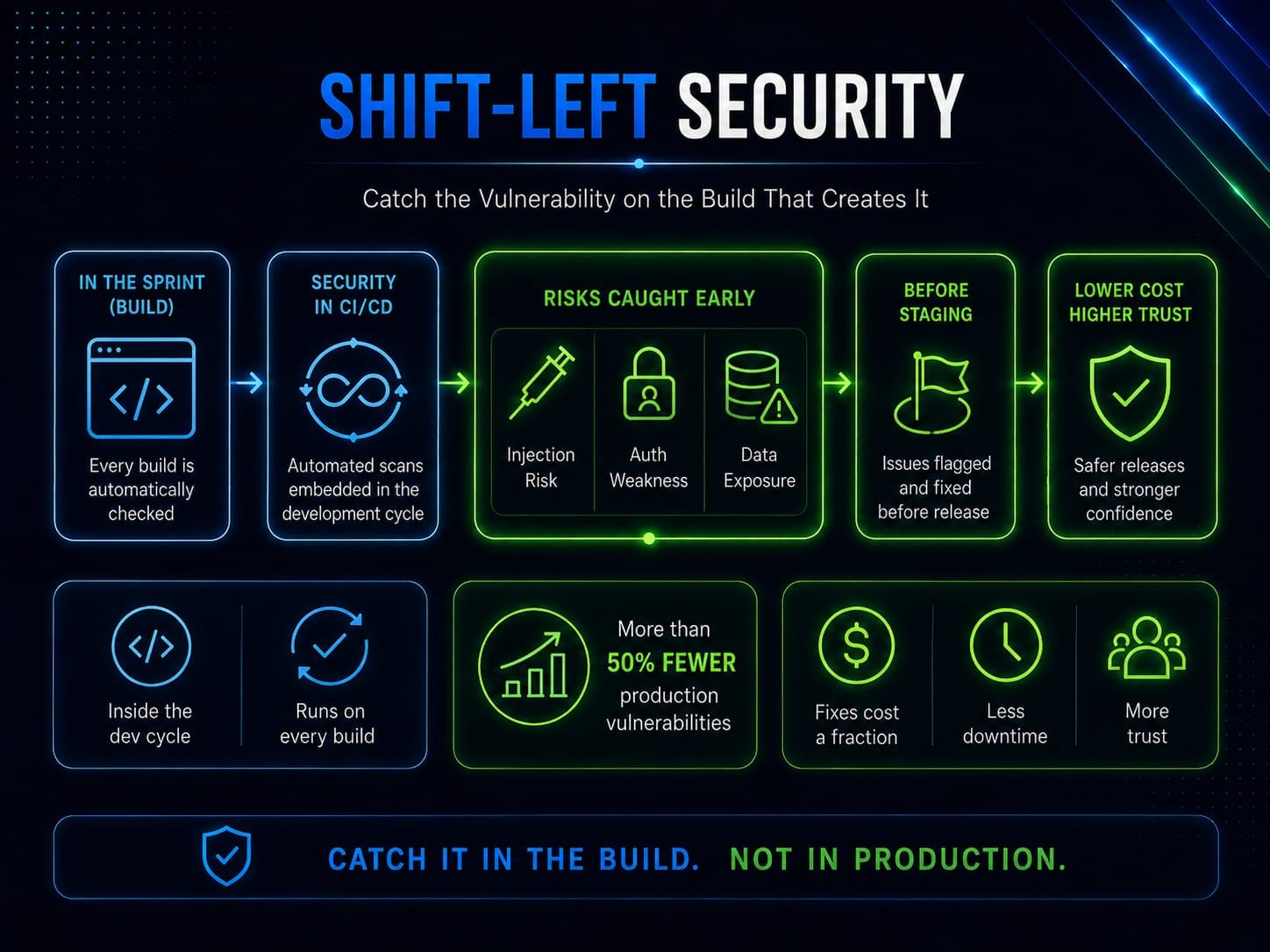
SHIFT-LEFT SECURITY

Catch the Vulnerability on the Build That Creates It

A flaw caught in production costs far more to fix than the same flaw caught in the sprint that introduced it – in money, in downtime, and in trust. We move security to where it belongs: inside the development cycle. Automated security scans run in your CI/CD pipeline on every build, flagging injection risks, authentication weaknesses, and data exposure before the code reaches staging. Teams that shift security into the build typically cut production vulnerabilities by more than half – catching them while they cost a fraction of what a production fix does.

11

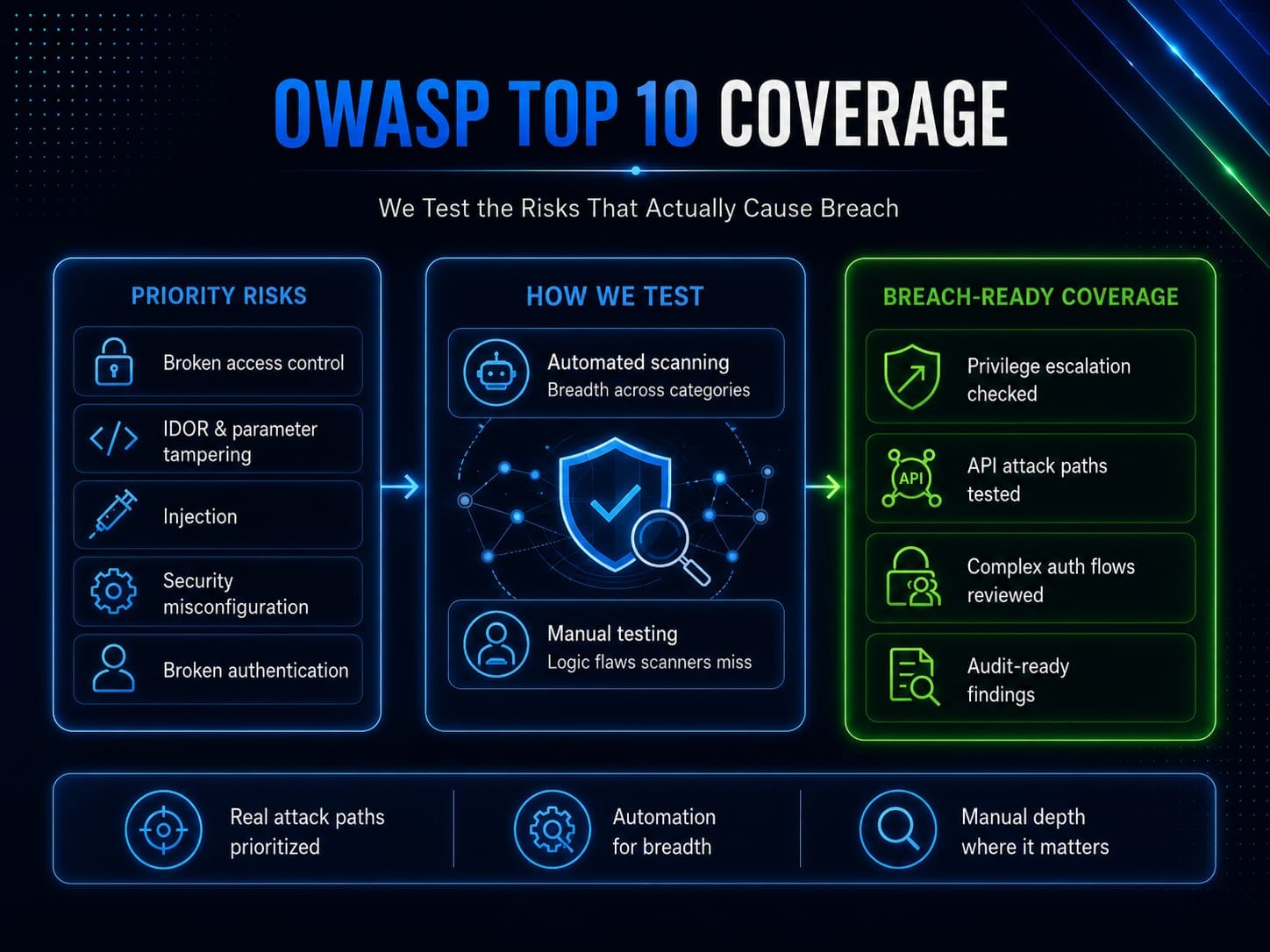
OWASP TOP 10 COVERAGE

We Test the Risks That Actually Cause Breach

The OWASP Top 10 isn’t an academic list – it’s where the overwhelming majority of real attacks land. Broken access control alone shows up in the vast majority of tested applications. Our engineers systematically probe each category: privilege escalation, IDOR and parameter tampering, injection, security misconfiguration, and broken authentication. We combine automated scanning for breadth with manual testing for the complex, logic-based vulnerabilities scanners never catch on their own.

12

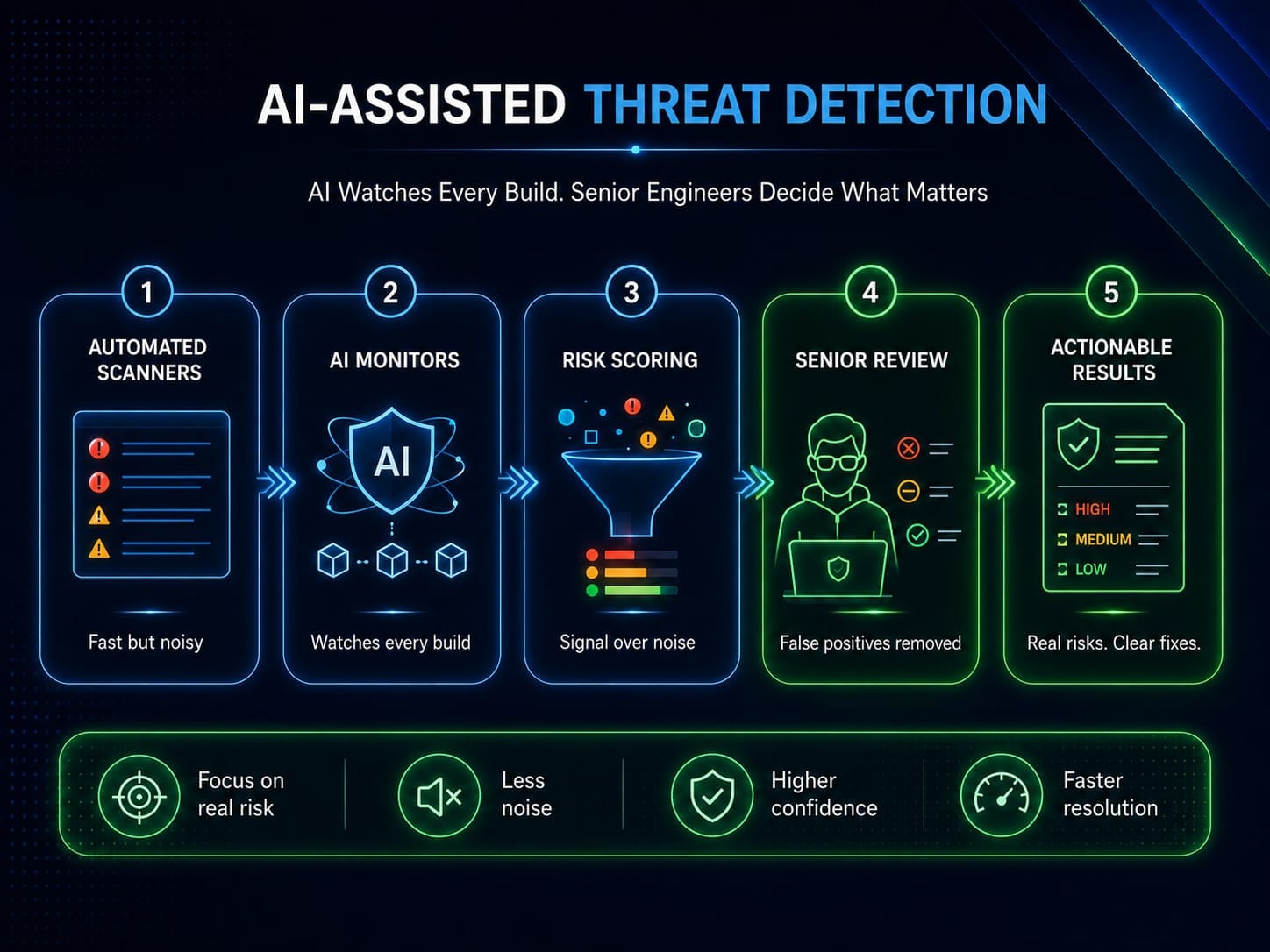
AI-ASSISTED THREAT DETECTION

AI Watches Every Build. Senior Engineers Decide What Matters

Automated scanners are fast but noisy – they flood teams with false positives until the warnings get ignored. Our AI layer monitors every build for injection patterns, authentication weaknesses, and data exposure, then scores findings by real risk so the signal rises above the noise. A senior security-focused engineer reviews every meaningful finding, eliminates the false positives, and confirms what’s genuinely exploitable. You get a short list of real risks with severity and remediation guidance – not a 400-line scanner dump nobody reads.

14

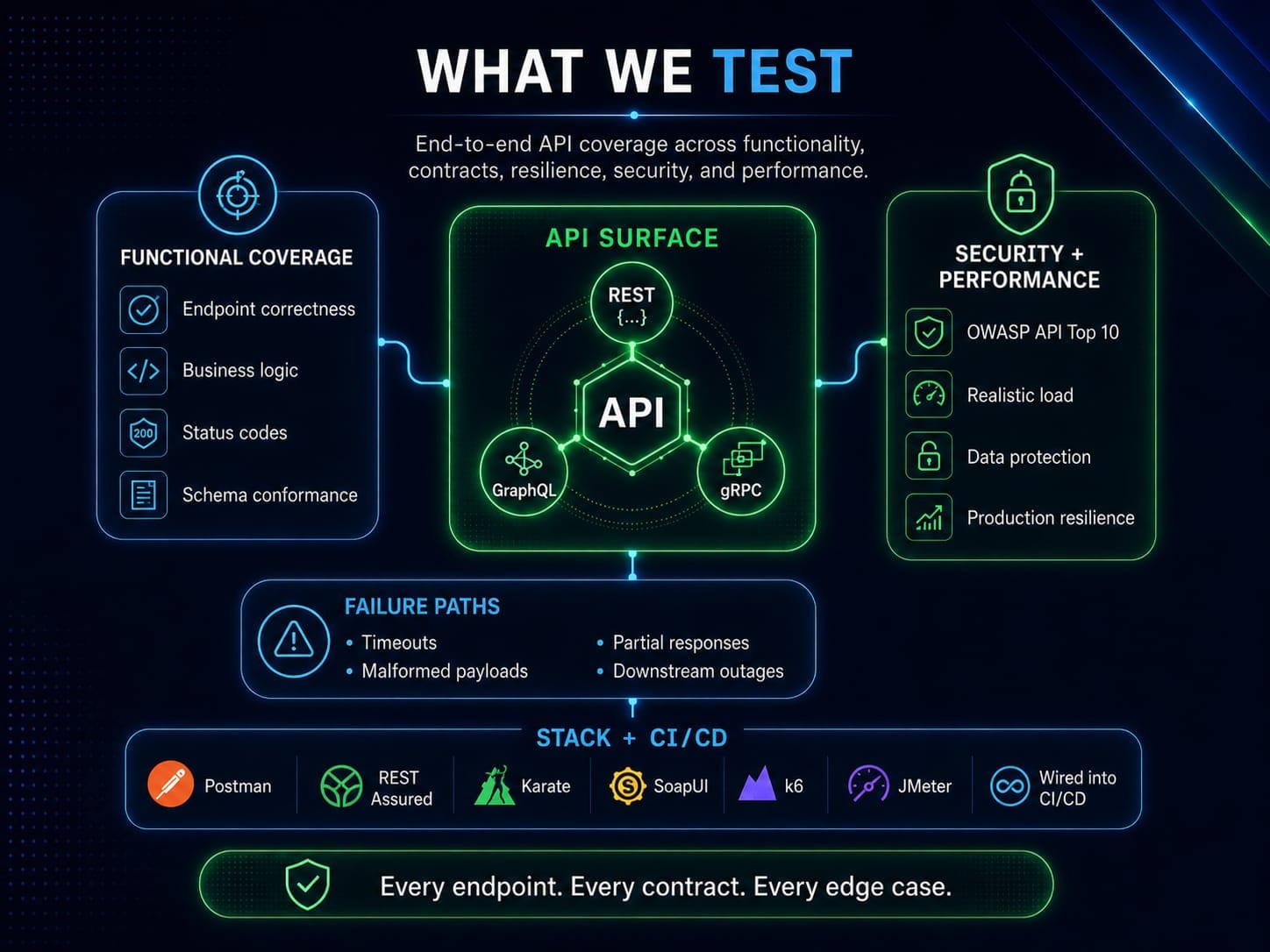
API & DATA SECURITY

Your Biggest Exposure Is the Layer Users Never See

Modern applications move their most sensitive data through APIs – and that’s exactly where security testing is most often thin. We test authentication and authorization on every endpoint, attempt to access data across user boundaries, probe for injection through the API layer, and verify that sensitive fields are never leaked in responses or logs. Broken object-level authorization and excessive data exposure are among the most common API breaches, and they’re squarely in what we hunt for.

COMPLIANCE READINESS

Walk Into Your Audit Already Prepared

For regulated industries, security testing isn’t optional – it’s the difference between passing an audit and failing one. We map our testing to the frameworks you answer to: PCI-DSS for payments, HIPAA for healthcare, SOC 2 for service providers, ISO 27001, and GDPR for anyone handling EU data. We work with both EU and US clients, and we know what each market requires – GDPR for European users, HIPAA and SOC 2 for US healthcare and SaaS, PCI-DSS wherever payments flow. We test with masked, realistic data and never against live records. You get documented evidence of continuous security testing, so compliance is a state you maintain, not a fire drill you survive once a year.

FAQ

Not quite – and that’s the point. A traditional pentest is a deep, point-in-time assessment, usually annual, often done by a dedicated security firm. We provide continuous security testing embedded in your QA cycle: every build is checked, every release is validated, and your code stays secure between those big assessments. We complement your annual pentest; we don’t replace it.

If your application handles user accounts, payment data, personal information, or connects to any third-party API, yes. Broken access control and data exposure don’t care what industry you’re in – they affect any app with users and data. The cost of a breach, in trust alone, almost always dwarfs the cost of testing for it.

AI handles breadth and speed: monitoring every build, scanning for known patterns, and scoring findings by risk. It never makes the final call. A senior engineer reviews every meaningful finding, removes false positives, and confirms real exploitability. AI accelerates detection; human expertise owns the verdict.

We map testing to PCI-DSS, HIPAA, SOC 2, ISO 27001, and GDPR. We don’t issue certifications – that’s the auditor’s role – but we make sure the security testing evidence behind those frameworks is in place and documented, so your audit is preparation, not panic.

No. We test in production-like environments using realistic, masked data – never against live customer records. This is both safer and, for regulated data under GDPR and HIPAA, the only responsible way to work.

Never per hour. Security testing is part of a dedicated QA engagement with a fixed monthly rate and contractual deliverables: continuous scanning in your pipeline, manual validation of high-risk areas, prioritized findings with remediation guidance, and reporting. You pay for a continuously secured release cycle, not for clocked hours.

Senior QA engineers with security focus, using AI tooling to extend their reach. Embedded in your team, attending your ceremonies, working in your pipeline – not an anonymous offshore queue you submit tickets to.

Testimonials

  • Jack

    CTO, FinTech Payments Platform

    “They found a broken access-control flaw in our payment flow that two prior audits missed – caught it on a routine build, not after it shipped. That alone paid for the engagement many times over.”

    4.0 rating
  • Sasa

    Head of Engineering, HealthTech

    “As a Swiss health-data platform, GDPR and confidentiality aren’t negotiable. They tested everything against masked data, documented it cleanly, and our SOC 2 prep went from chaos to a checklist.”

    5.0 rating
  • Aleksandar

    VP Engineering, B2B SaaS

    “We assumed security was the developers’ job until an API endpoint leaked data in staging. Now every build gets scanned automatically, and we actually understand our exposure for the first time.”

    5.0 rating
Form Image

Ready to Boost Product Quality?

Requests are reviewed within 48 hours. We’ll follow up with next steps.