
Telecom and Network Systems
FAQ
Yes. We work in production-like test environments with realistic, masked data – never against live subscriber records. Provisioning, activation, and billing flows are validated in isolation so there’s zero risk to customers in production while we test.
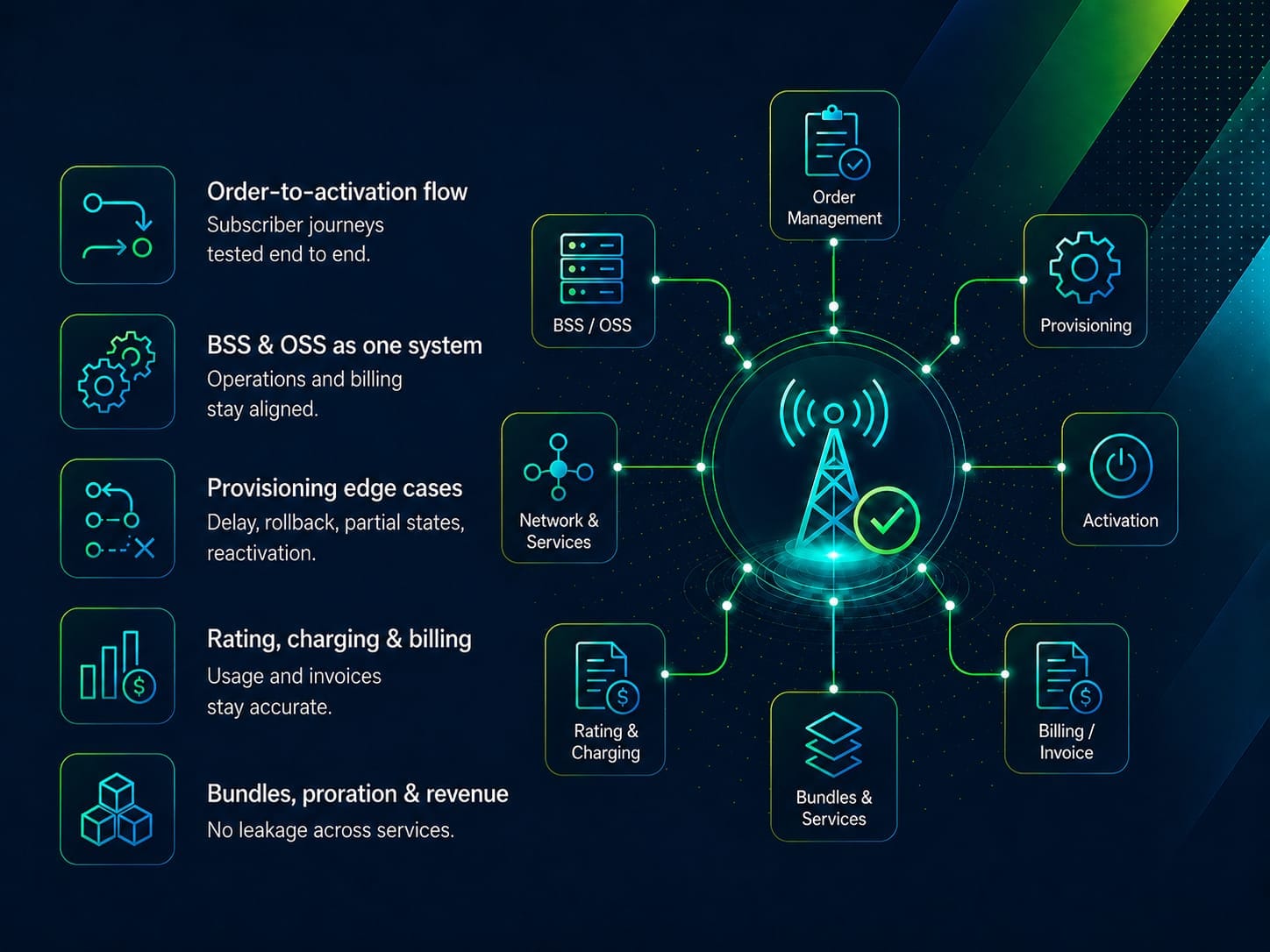
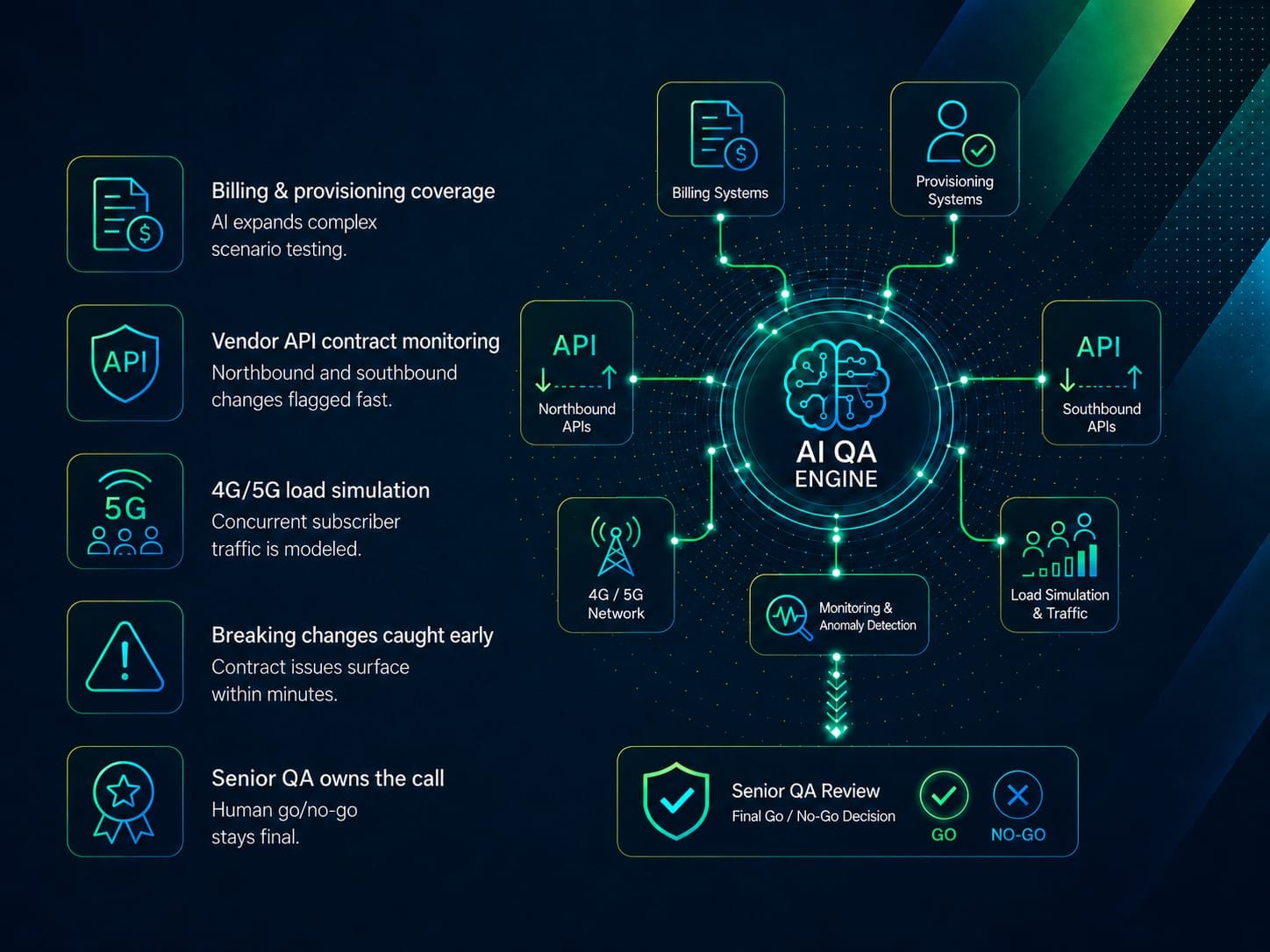
We test them as one connected system, not in isolation. Billing, CRM, order management, provisioning, and network elements all have to talk to each other correctly – so we validate the full chain end to end, with AI-monitored contract testing that flags a breaking change between two systems within minutes of a build.
Billing is where telecom most quietly loses money. We generate exhaustive billing scenarios – multi-service bundles, proration, mid-cycle changes, rating edge cases, real-time charging – and reconcile expected against actual, so miscalculations are caught before they hit an invoice or a regulator.
Yes. We simulate concurrent subscriber load on 4G/5G and real-time services using k6 and JMeter, then validate latency, throughput, and recovery under stress – so the network holds up at the volumes real usage creates, not just average load.
We do – including the failure paths most teams under-test: delayed provisioning, rollbacks, partial or inconsistent states, reactivation after changes, SIM management, roaming, and number portability. These are exactly where subscribers get stuck half-activated.
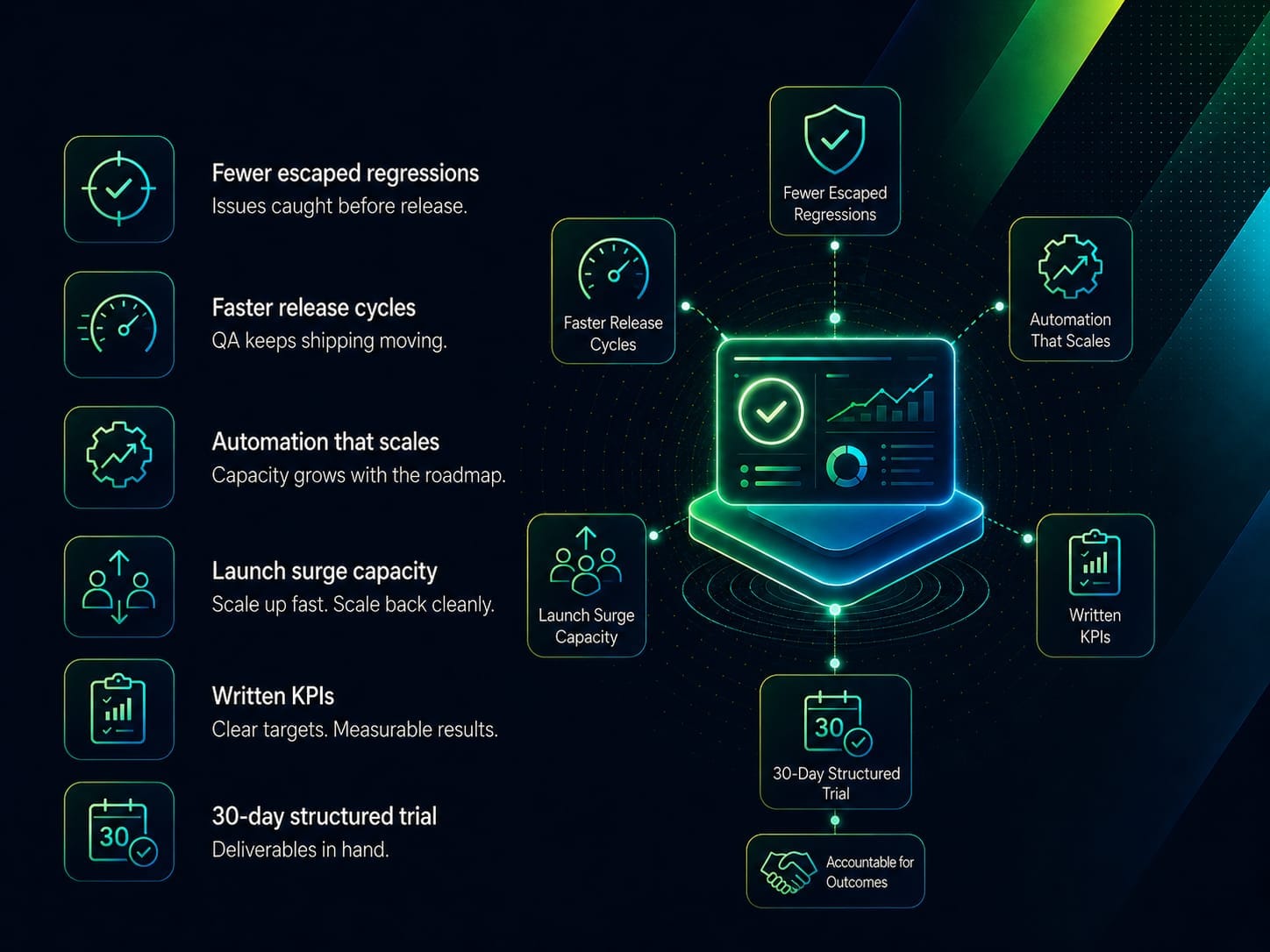
Days 1–10 cover your architecture, stack, integrations, and team rhythm. From day 11 the engineer contributes independently. By day 30 you have a working Playwright framework, the first automated tests live in CI/CD, and a clear picture of the value ahead.
Contractual KPIs: minimum 80% automated coverage of critical functions, at least 30 new automated tests per month, defect reporting within 24 hours, 100% attendance at your Scrum ceremonies, a written report every Friday, and a maximum 4-business-hour response time.
Playwright as primary, Selenium for legacy and enterprise environments, Appium for mobile, and Postman for the API layer that carries most telecom integration risk. Performance runs through k6 and JMeter. AI-enhanced locators keep automation alive through UI changes without a maintenance sprint.
Use cases