API Testing
FAQ
Yes. End-to-end tests validate complete workflows but are slow, expensive to maintain, and terrible at pinpointing why something failed. API tests are faster, more stable, and tell you exactly which service and which contract broke. The two work together – E2E proves the journey, API testing proves the layer underneath it.
All three, plus SOAP where legacy systems require it. We validate each against its specification – OpenAPI for REST, schema validation for GraphQL – so tests check documented behavior, not brittle implementation details.
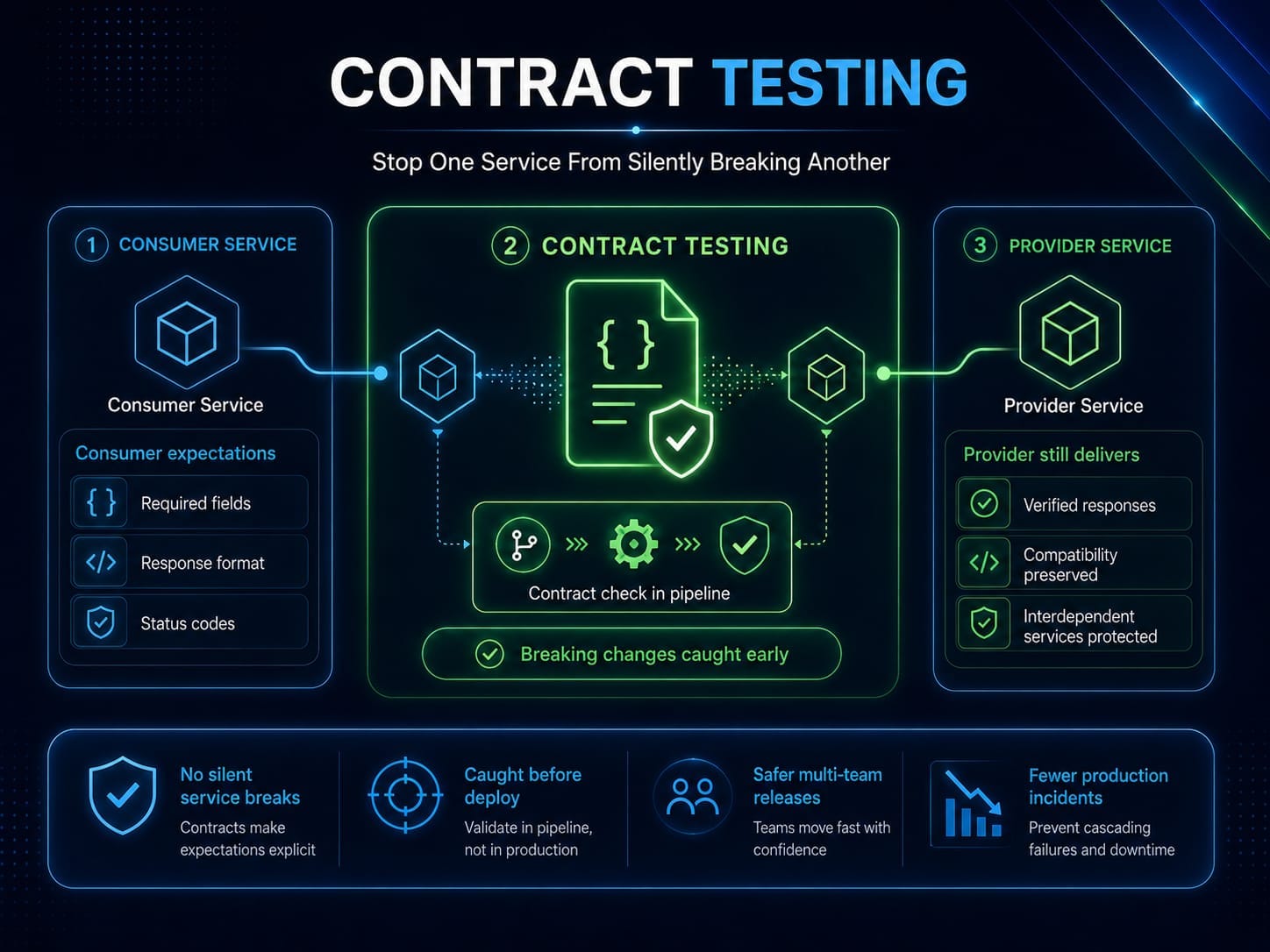
Contract testing verifies that the agreement between two services still holds – what one sends, the other still accepts. You need it most when multiple teams own interdependent services or deploy independently, which is nearly every microservices setup. It catches breaking changes in the pipeline instead of in production.
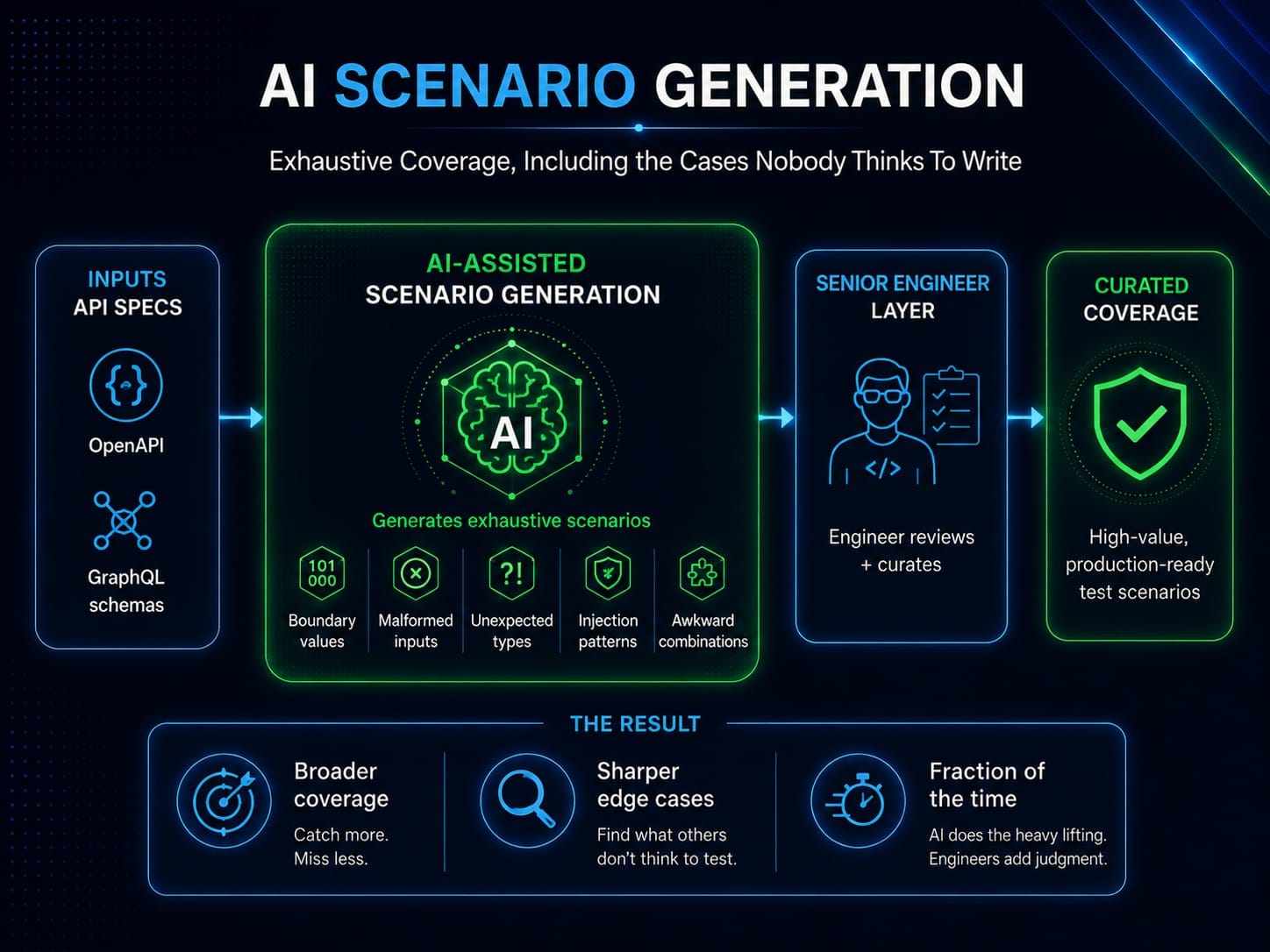
AI generates exhaustive test scenarios from your API specs – edge cases, malformed inputs, injection patterns, and combinations a human would take days to enumerate. The engineer reviews and curates. You get broader, sharper coverage faster, without AI ever making the final call on what ships.
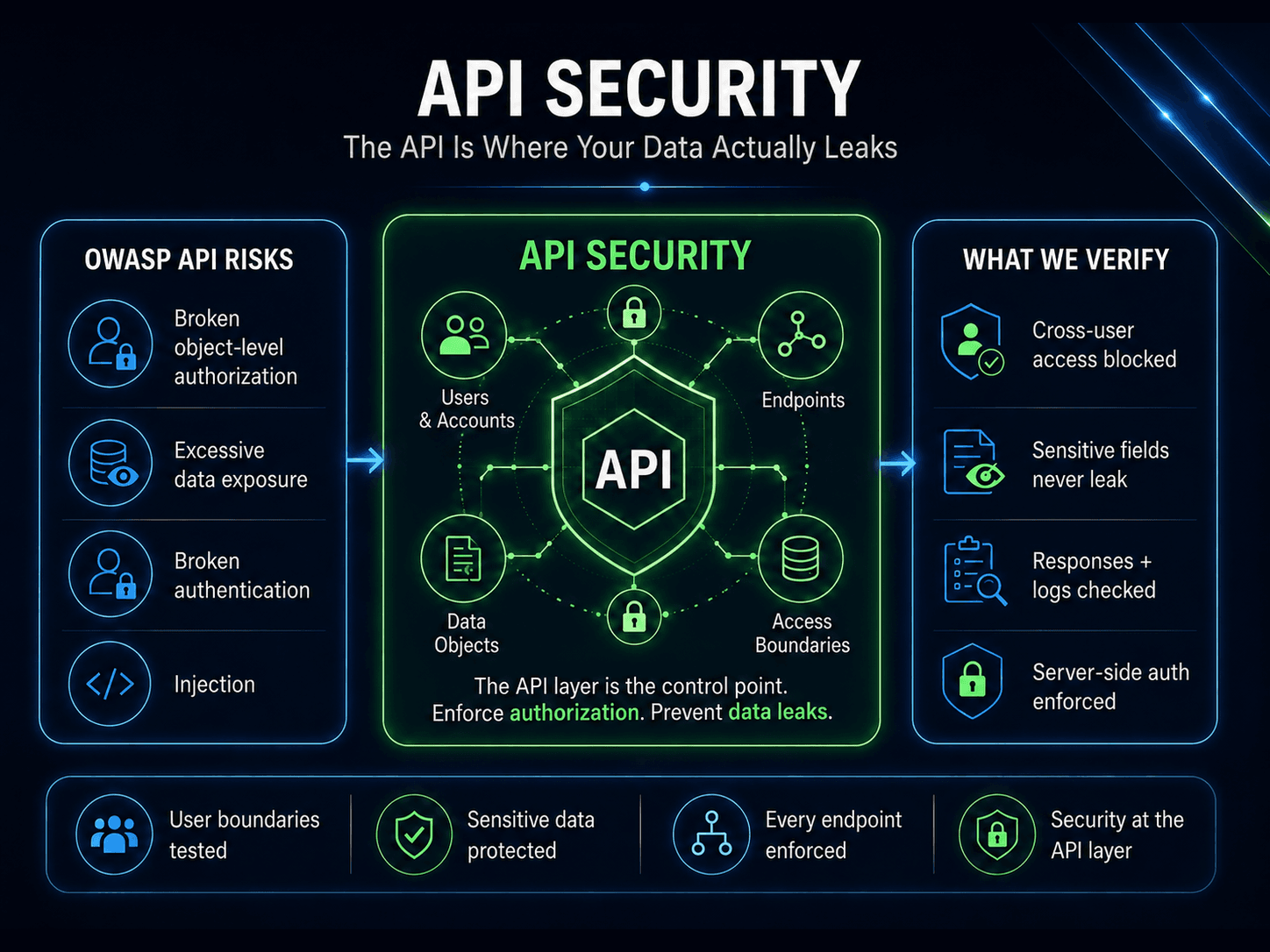
All three. Functional correctness, security against the OWASP API Top 10, and performance under realistic load – at both the individual microservice level and the full system level. A correct API that leaks data or collapses under traffic still fails in production.
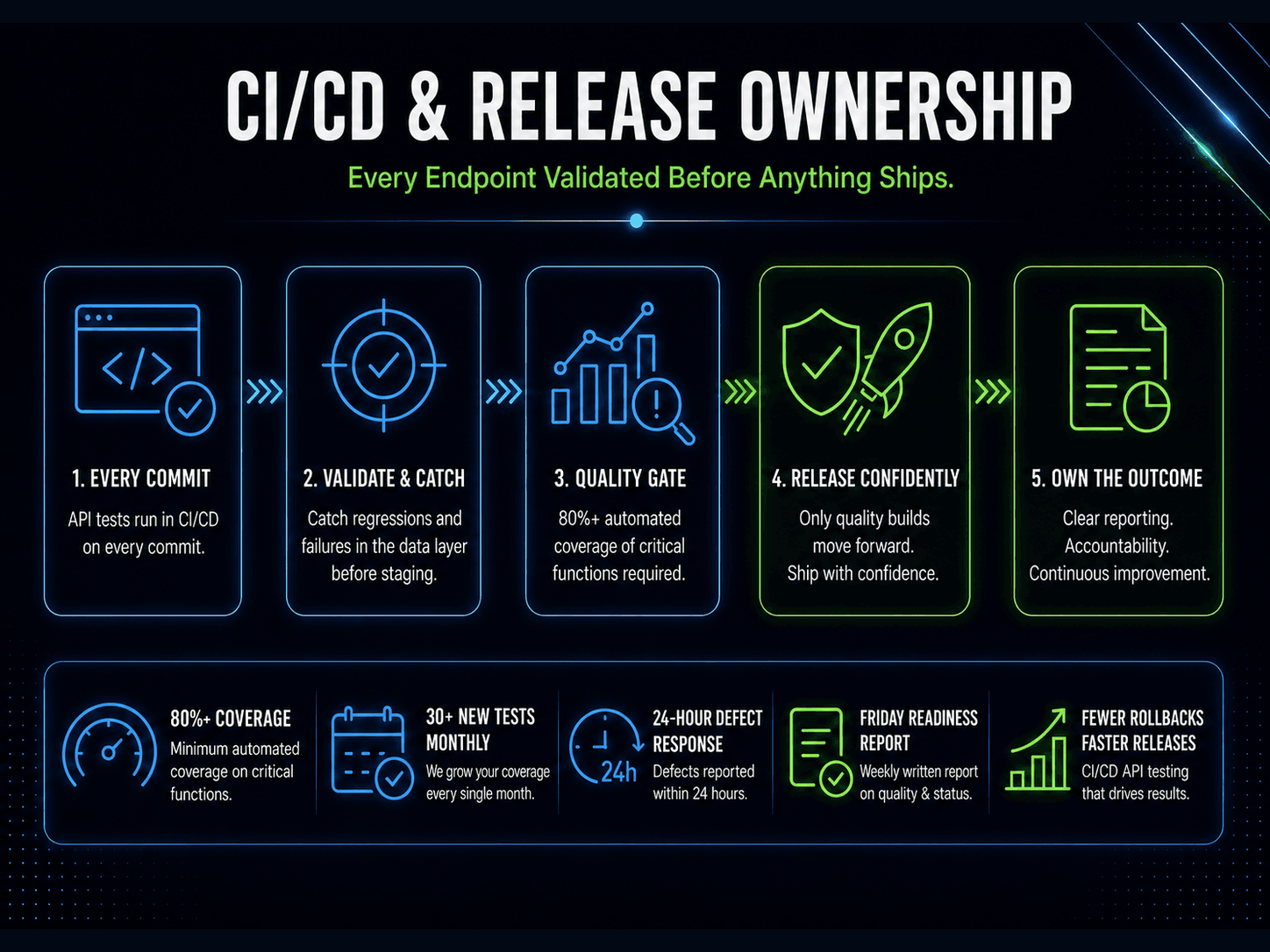
Never per hour. API testing is part of a dedicated QA engagement at a fixed monthly rate with contractual deliverables: coverage targets, 30+ new tests a month, defect reporting within 24 hours, and weekly reports. You pay for a reliably tested API layer and a guaranteed output, not for clocked hours.
Entirely. Tests are built in standard, open tooling – Postman, REST Assured, Karate – documented and exportable. If we part ways, you keep the full suite and the framework. No proprietary platform, no lock-in.
Use cases