
Mobile Testing
FAQ
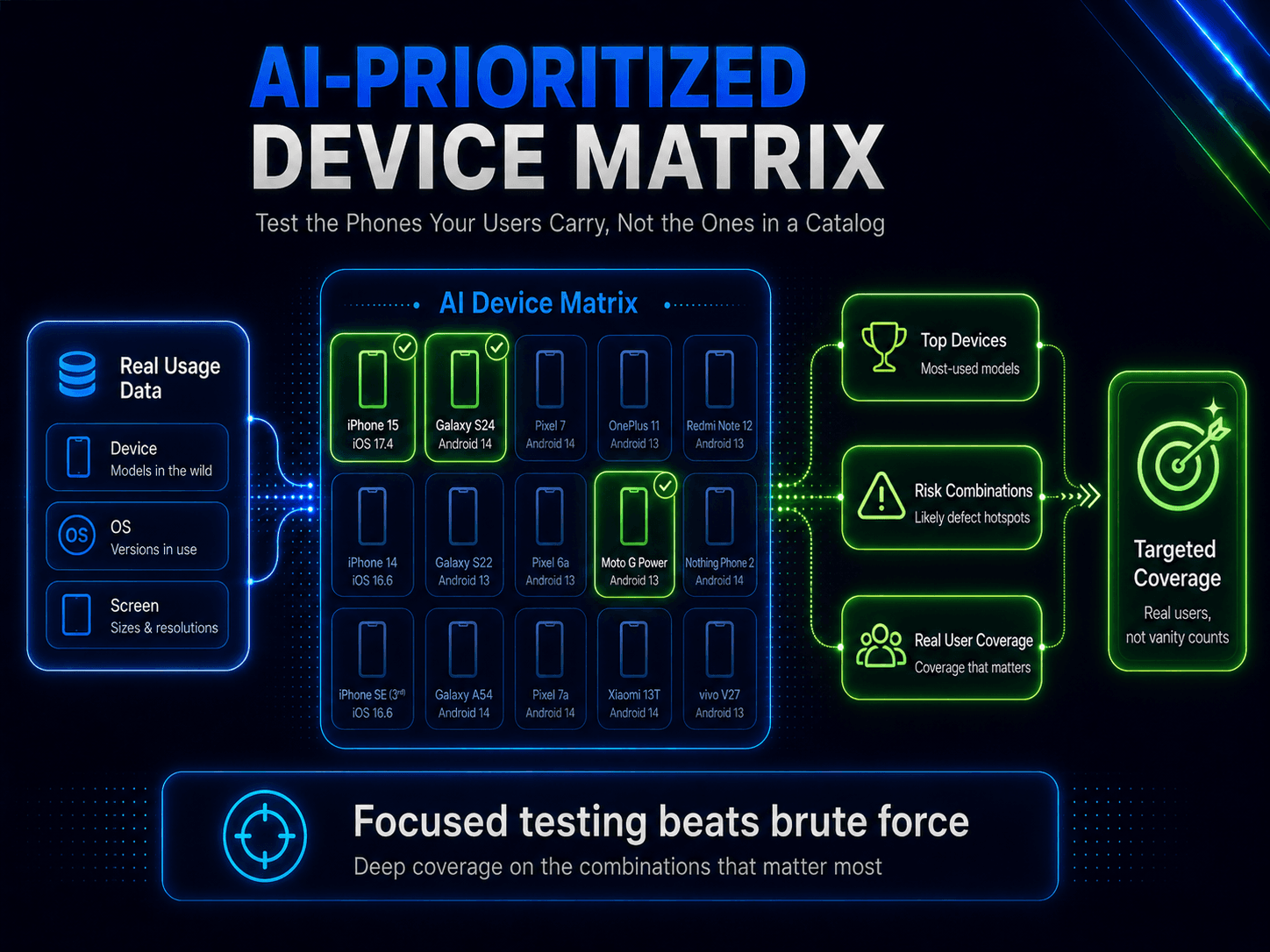
We don’t test everything – we test what your users use. We analyze your real usage analytics and let AI prioritize the device, OS, and network combinations that cover the most users and carry the highest risk of failure. You get coverage mapped to your actual audience, not a meaningless count of devices.
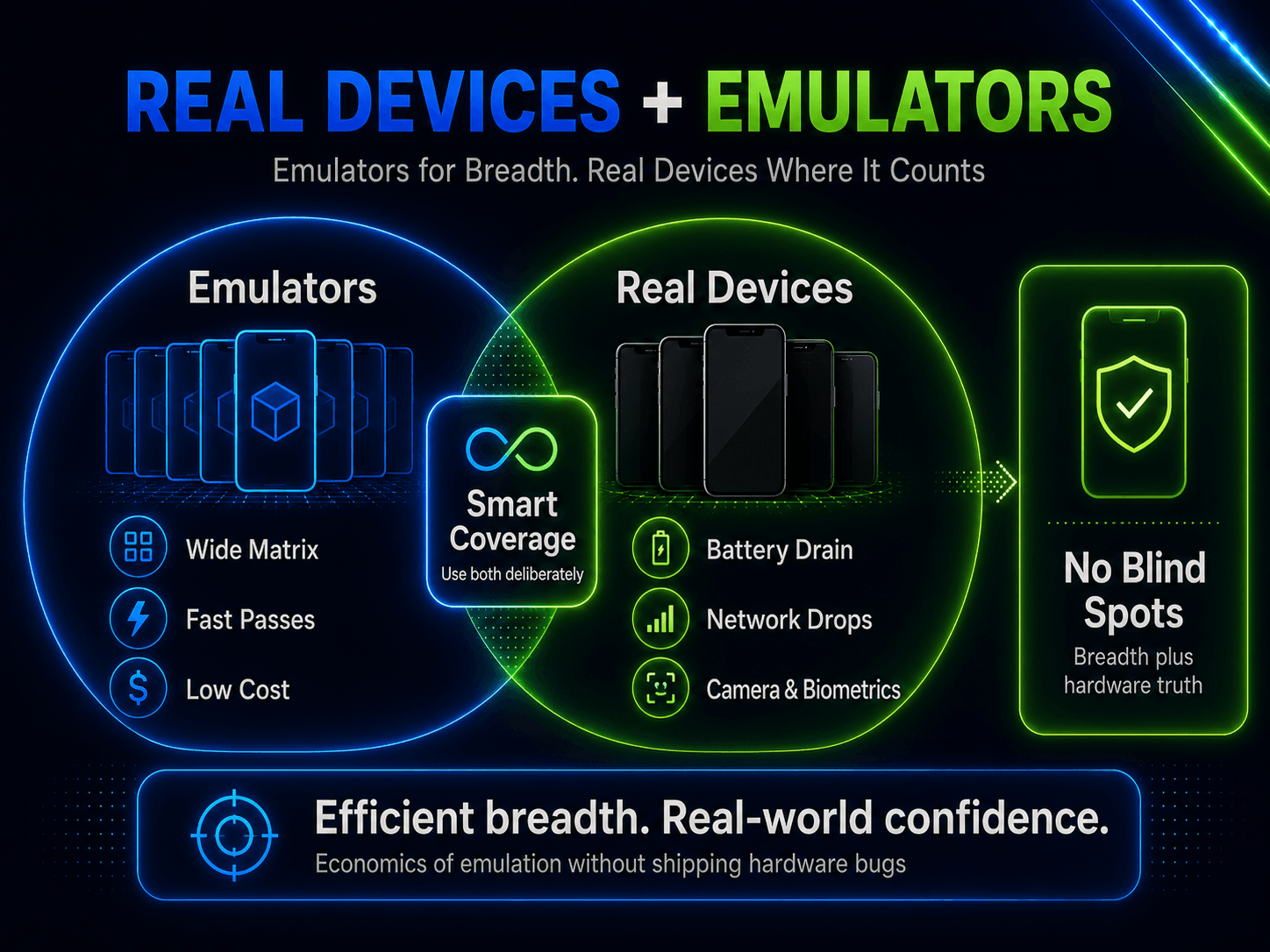
Both, on purpose. Emulators handle broad compatibility passes efficiently; real devices handle the high-risk flows where actual hardware, battery, network, and biometrics decide the outcome. Using only emulators ships bugs; using only real devices wastes money. The mix is the skill.
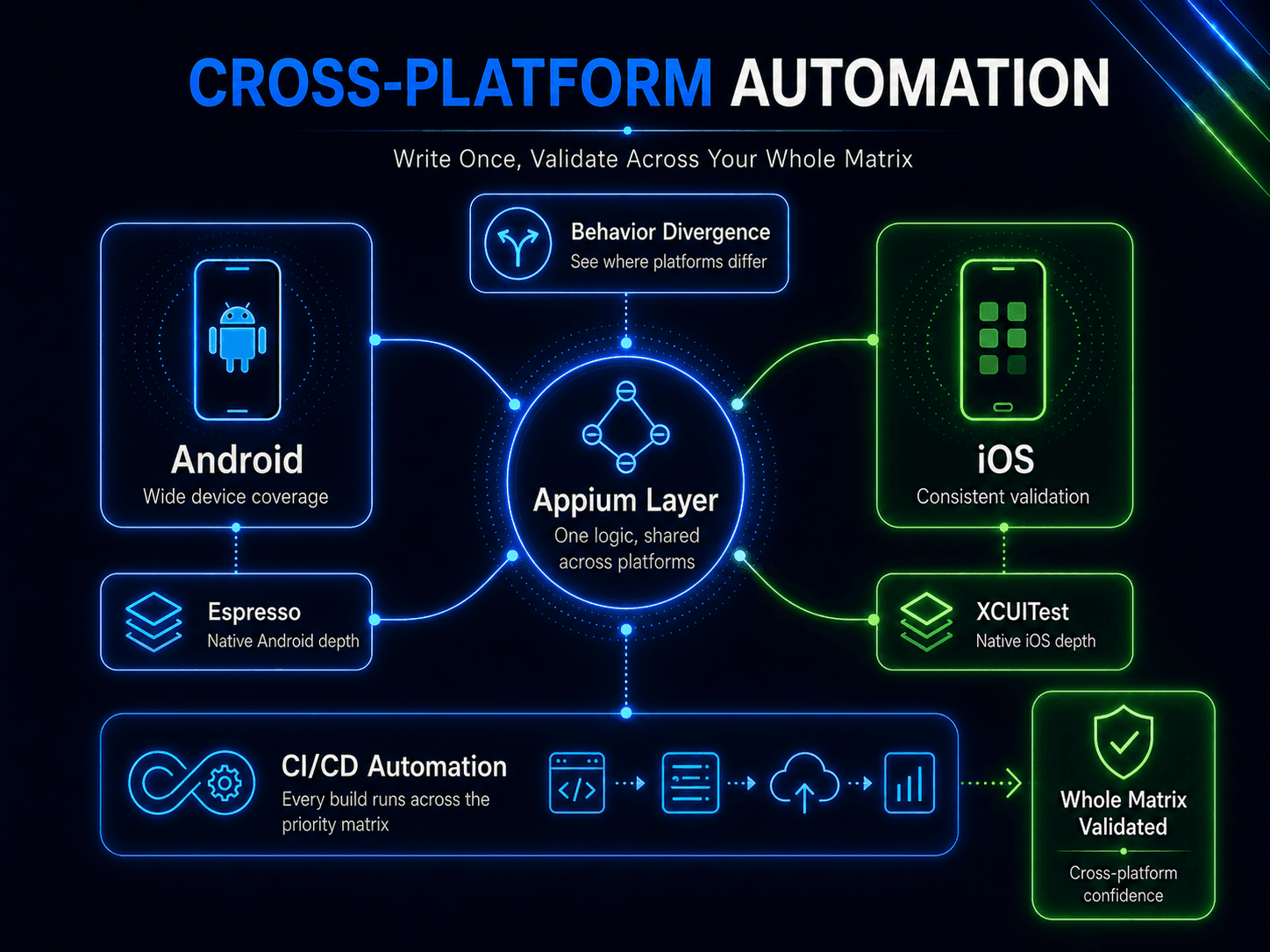
Yes – all three, on both iOS and Android. Appium covers native, hybrid, and mobile-web with a unified automation layer, and we use Espresso or XCUITest where platform-specific depth is worth it.
It prioritizes your device matrix by real user behavior and defect likelihood, so testing effort lands where it pays off. It also helps surface the platform combinations where behavior diverges. The engineer reviews and decides – AI aims the effort, the engineer owns the call.
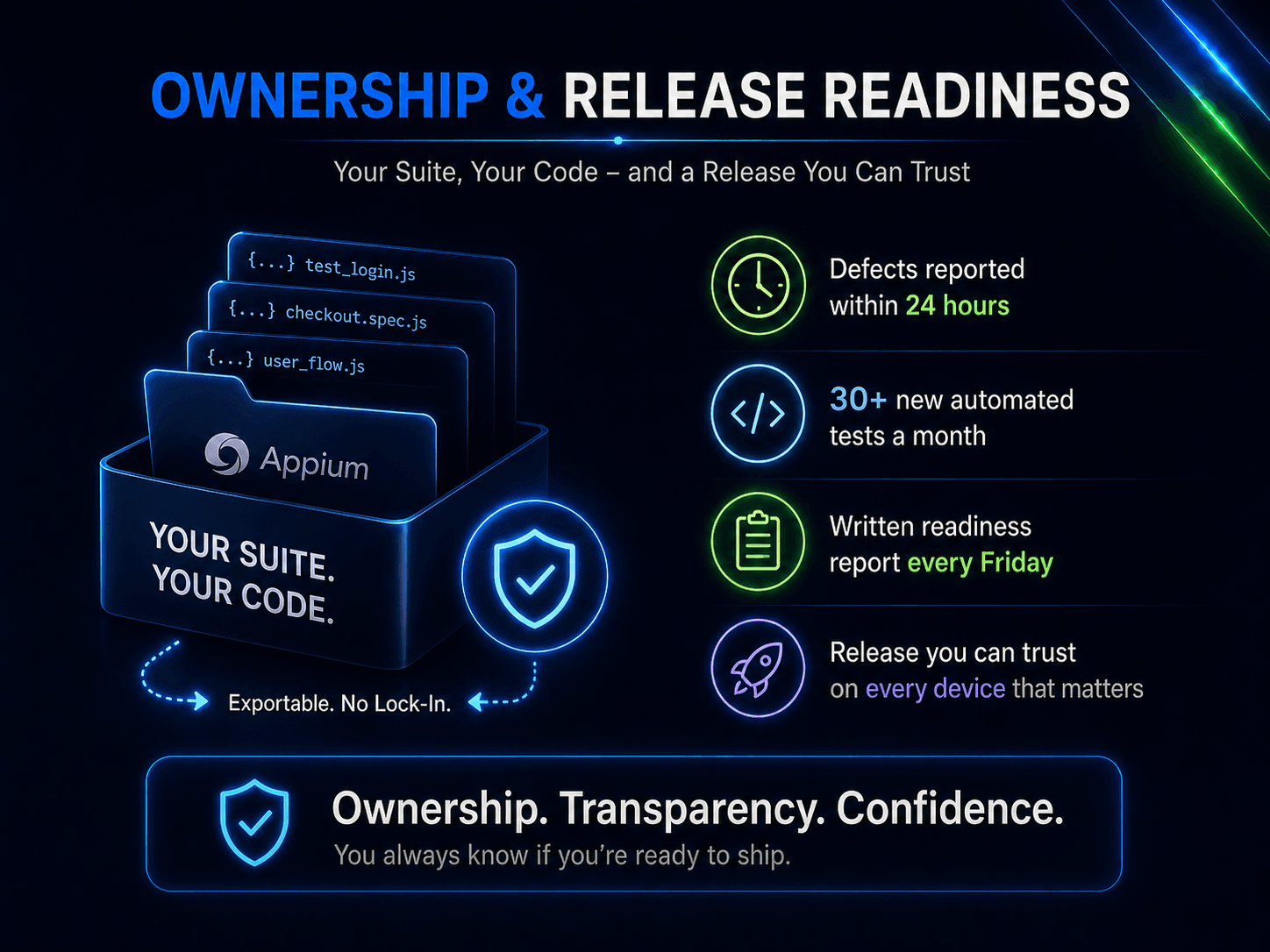
No. Your tests are standard, documented Appium – exportable and yours to keep. If you ever bring testing in-house or switch, you walk away with the full suite and framework. We designed against the lock-in that plagues outsourced mobile QA.
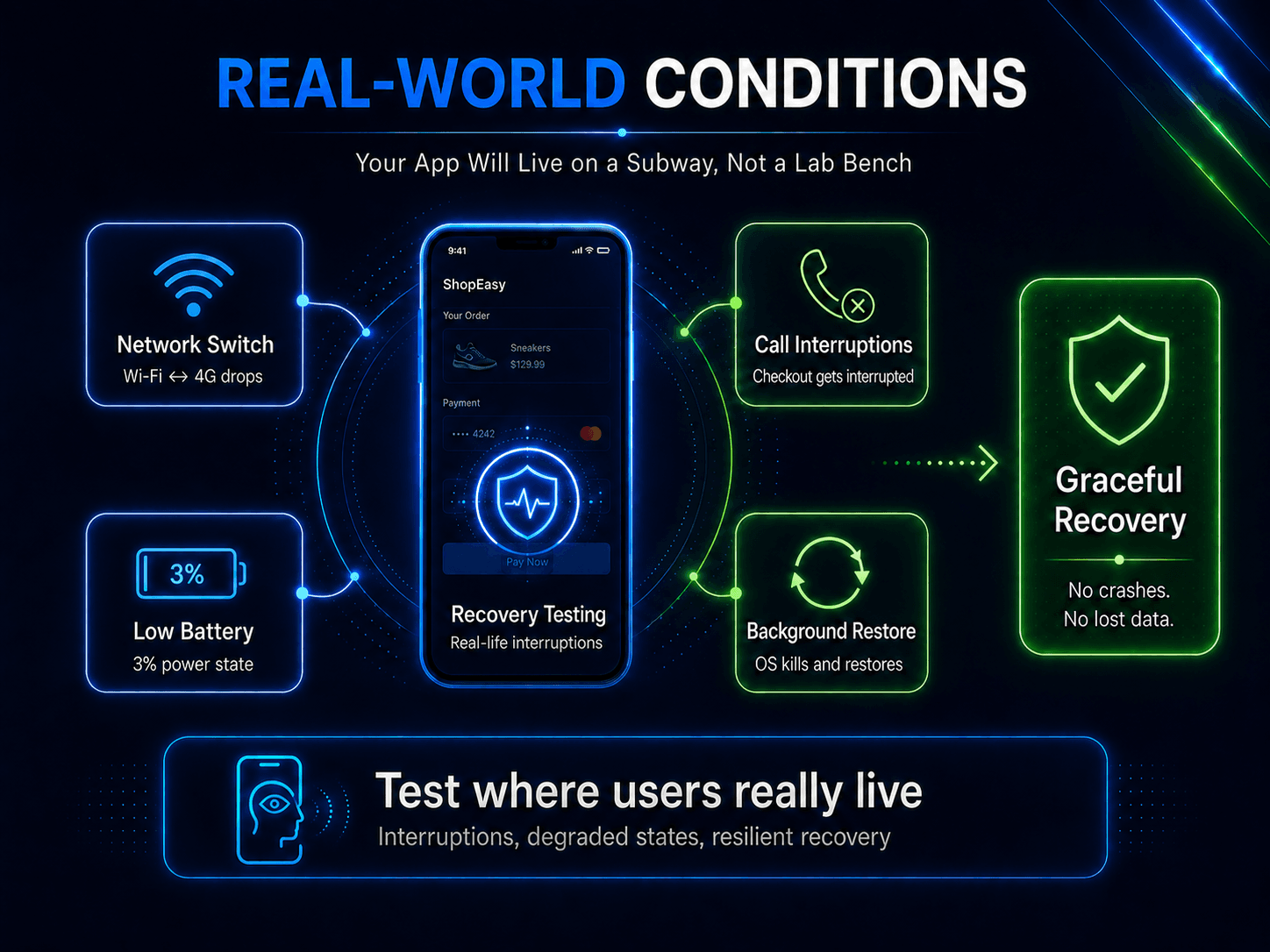
Yes, deliberately. Network switching mid-transaction, call and notification interruptions, low battery, low memory, and backgrounding – these are where mobile apps actually fail, so these are exactly what we test, not just the happy path on full Wi-Fi.
Never per hour. Mobile testing is part of a dedicated QA engagement at a fixed monthly rate with contractual deliverables: a prioritized device matrix, 30+ new tests a month, defect reporting within 24 hours, and weekly reports. You pay for an app that works on the devices your users carry, not for clocked hours.
Use cases